About Solanum aculeatissimum Jacq.
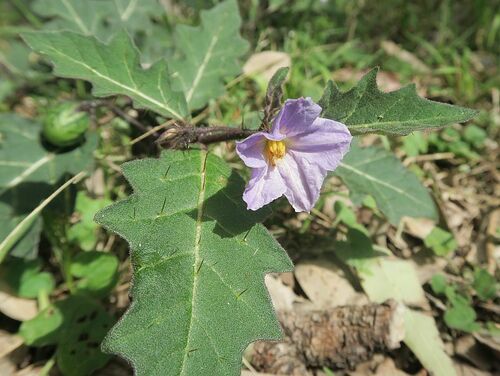
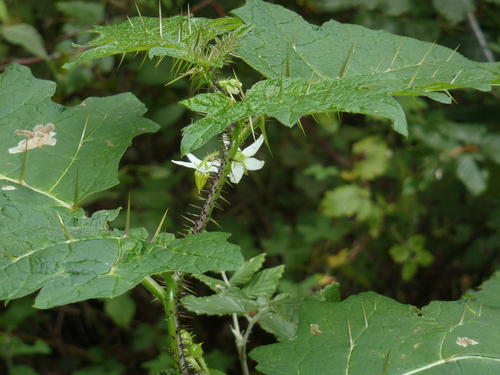
Solanum aculeatissimum Jacq., commonly called Dutch eggplant and love-apple, is a weedy shrub. It produces white flowers with the characteristic yellow stamens of the Solanum genus, which develop into small pale yellow fruits measuring 2–3 cm. The native origin of S. aculeatissimum has not been conclusively determined. Although its common name suggests a South Asian origin, it is most likely native to either Africa or South America. Specimens have been found in Asia, but the species is rare there and is thought to be an introduced species that arrived through accidental or deliberate introduction. It is closely related to other Solanum species native to both sub-Saharan Africa and Central America. S. aculeatissimum was first documented on the continent of Africa. Scottish-born botanist Francis Masson discovered the plant near the Cape of Good Hope, either between 1772 and 1774, or during a later expedition when he stayed in southern Africa from 1786 to 1795. In South America, the plant was first described between 1816 and 1821 by Augustin Saint-Hilaire. The fruits of this species are considered toxic. Force-feeding both ripe and unripe fruits has caused deaths in cattle, and free-ranging cattle appear to avoid eating the fruit. The highest concentration of alkaloids, 4.4%, is found in the seeds. Despite its toxicity, traditional African remedies use a decoction of the fruit, fruit sap, or sap from roasted fruit. The major glycoalkaloid found in its foliage, stems, fruit, and seeds is solasonine. Minor alkaloids present include solamargine, solanine, and solasodine.