About Socratea exorrhiza (Mart.) H.Wendl.
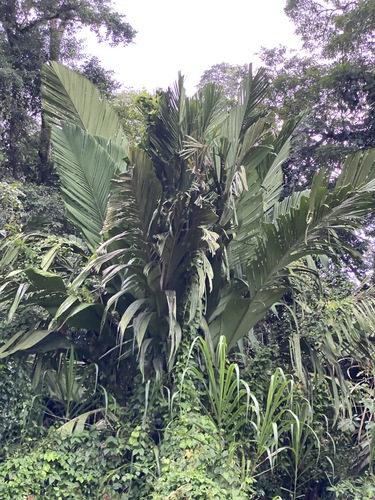
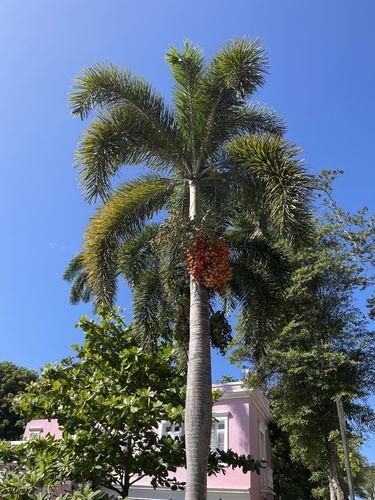
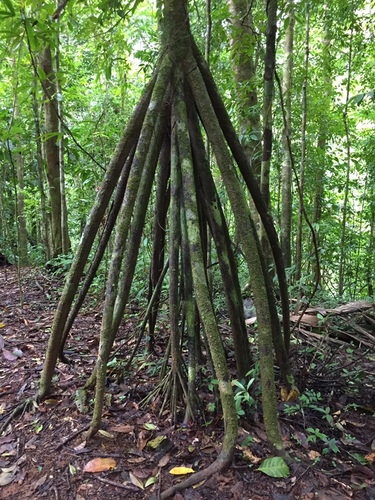
Scientific name: Socratea exorrhiza (Mart.) H.Wendl. In terms of leaf morphology, S. exorrhiza leaves grown in full sun are thicker, and have more trichomes and more stomata than leaves of this species grown in shade. In younger S. exorrhiza trees, all leaflets are arranged along a single plane, similar to leaflet arrangement in Howea. In older individuals, leaflets are scattered across multiple planes, matching the arrangement seen in queen palms. For reproduction, Socratea exorrhiza flowers mostly during the dry season. It is considered to be beetle-pollinated, and is frequently visited by beetle species of the genera Phyllotrox (tribe Derelomini) and Mystrops (family Nitidulidae). Its seeds weigh around 3.5 grams, measure approximately 2 cm long and 1.5 cm wide. Only around 45% of these seeds germinate, and around one quarter of the germinated seeds die before reaching maturity. This species has several recorded uses. Its trunk is used in the construction of houses and other structures, and also to make hunting spears. The trunk is usually split lengthwise before use, but it can also be hollowed out and used as a tube. The inner portions of the palm's stilt roots are used as a male aphrodisiac. The yellow fruit of S. exorrhiza is edible. The leaves may be used to build temporary shelters, or to roof more permanent huts. A harpoon foreshaft made from wood of this palm was recovered alongside a large flaked lithic projectile point in an underwater preceramic site in the middle Xingu region.