About Sitona lineatus (Linnaeus, 1758)
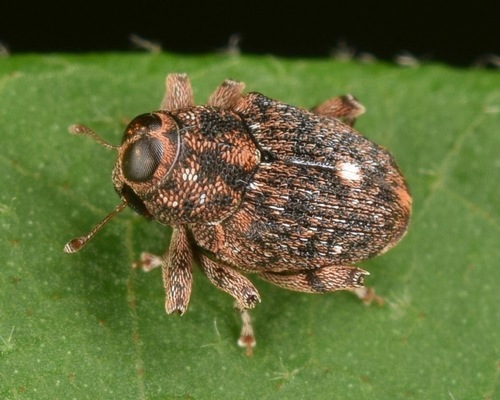
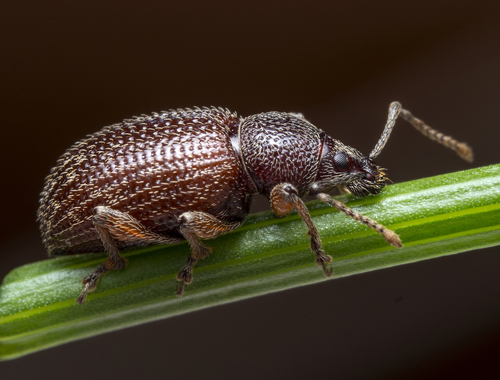
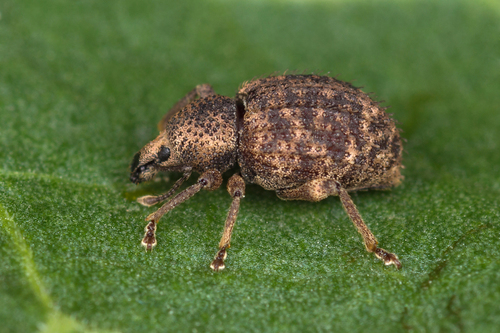
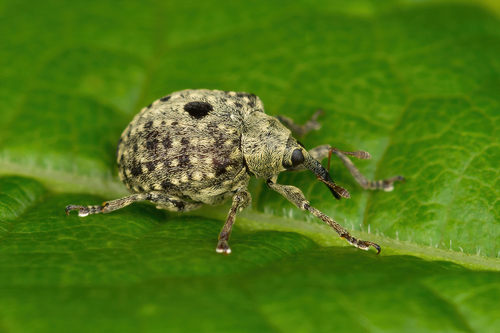
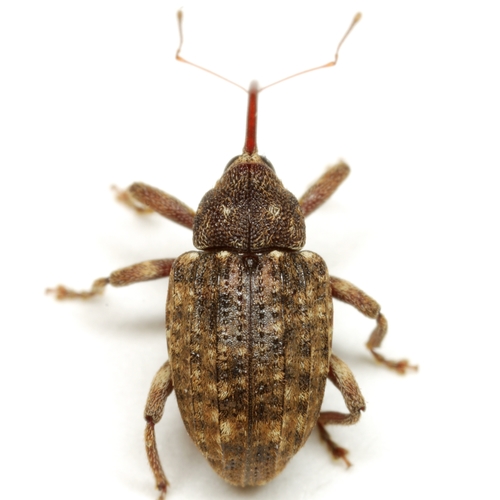
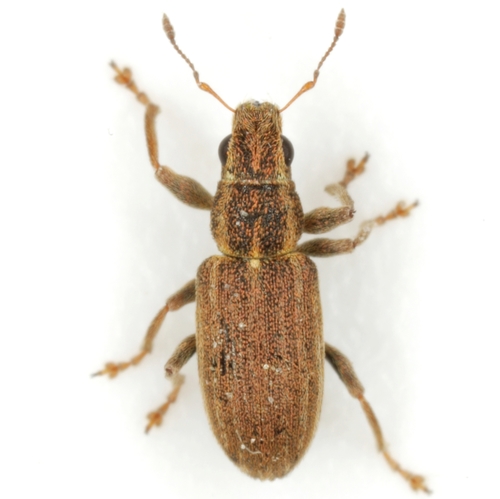
The pea leaf weevil, known scientifically as Sitona lineatus (Linnaeus, 1758), is a weevil species native to the Palearctic realm. It is a common pest of beans, peas, and other plants in the Fabaceae family. Adult S. lineatus beetles range from 3.4–5.3 mm (0.13–0.21 in) in length. Their defining feature is a pattern of alternating colored scale lines, called striae, on their elytra; this feature gives the species its name lineatus, which means 'lined' or 'striped'. Fine pointed setae are mixed among the scales on the head and pronotum. The antennae are clubbed and pointed, with seven segments before the club. The femora are dark, while the tibiae and tarsi are red. As a member of the beetle order Coleoptera, this species has modified forewings that form hardened covers over the thorax and abdomen, with flight-capable hindwings positioned underneath these covers. Sitona lineatus is native to Europe and North Africa, and it is classified as an invasive species in North America. In North America, it is most commonly found in the western prairie provinces of Canada: Alberta, Saskatchewan, and Manitoba. From this core range, the species is expanding south across the Canada-USA border into North Dakota, and north into higher latitudes of Alberta. Precipitation is the main factor limiting this expansion, with temperature playing a smaller limiting role. Climate models predict the species will likely be able to expand further north in the future. S. lineatus is a univoltine species that is oligophagous, feeding only on plants within the Fabaceae family. Adult weevils overwinter in the field margins of pea and bean crops, or migrate to alfalfa fields before winter begins. Their emergence from winter dormancy is tied to temperature: adults typically leave their overwintering sites when temperatures reach 12.5 °C. Wind currents are the main way they locate and colonize new crop habitats. Both male and female weevils live longer when feeding on pea plants than when feeding on alfalfa, which is their main food source over winter and in early spring before migration. For females, longer lifespan corresponds to higher fecundity. Females disperse from areas of high population density to low-density areas to maximize their egg-to-plant ratio. Females that feed on pea crops generally have greater reproductive capability than those that feed mostly on alfalfa, so it is beneficial for them to move from winter shelters and field margins to newly emerged spring pea plants. After spring mating and reproduction for both sexes, adult weevils feed on the leaves of Fabaceae plants. Once eggs hatch, larvae burrow into the soil, where they feed primarily on Rhizobium bacteria that grow in the root nodules of host plants. While developing underground, larvae go through five growth stages called instars, then emerge as new adult weevils that feed on above-ground crop tissue just like the previous generation in mid-summer. In late August, surviving adult weevils leave crop plants and migrate to field margins, alfalfa fields, or other habitats that provide suitable shelter for overwintering dormancy.