About Sisymbrium altissimum L.
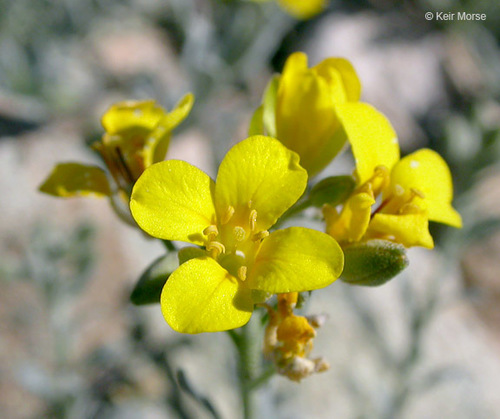
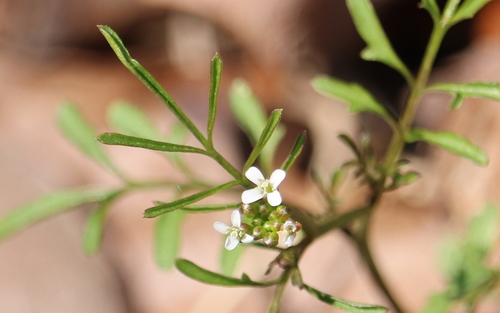
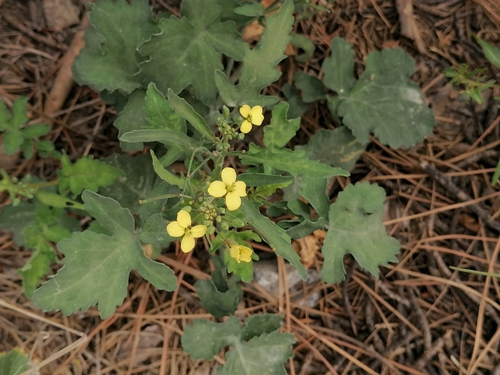
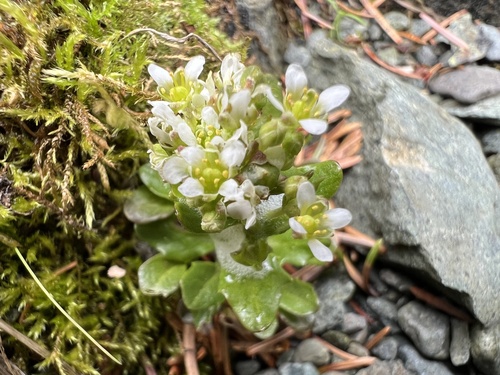
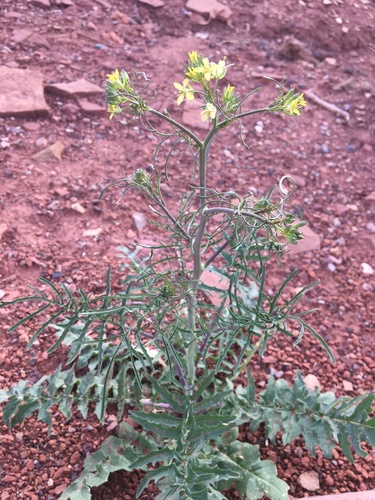
Tumble mustard (Sisymbrium altissimum L.) forms an upright, delicate-looking plant with slender, much-branched stems that reach up to 1.5 metres (5 feet) in height. Its stem leaves are divided into thin, linear lobes, while its basal leaves are broader and pinnately compound. The flowers are inconspicuous, only 6.4 millimetres (1⁄4 inch) wide, with four usually yellow petals and four narrow, curved sepals. Its slender seedpods are 5–10 centimetres (2–4 inches) long. The plant germinates in winter or early spring, and has a lengthy blooming period. When mature, the plant dies, uproots, and tumbles with the wind to spread its seeds. This species is native to the western portion of the Mediterranean Basin, spanning Europe and Northern Africa. It is widely naturalized across most of the world, including all of North America, and was probably introduced to North America as a contaminant of seed crops. It can grow in soils of any texture, even sand. Its leaves have a strong enough spicy flavor to be used in place of wasabi, and can also be mixed into salads and other dishes.