About Sinapis alba L.
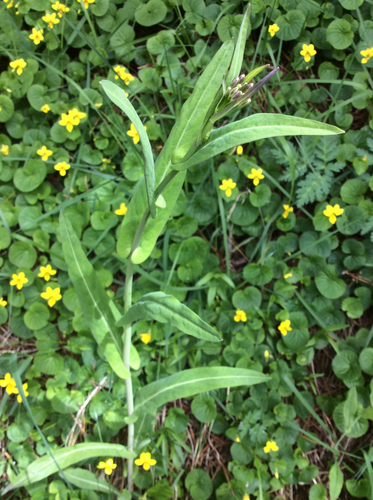
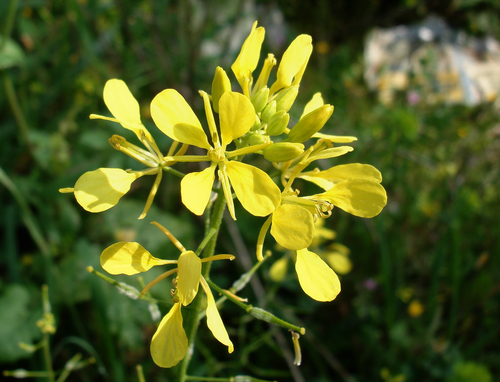
White mustard, Sinapis alba L., is an annual plant that grows up to 70 centimetres (28 in) tall, with stalkless pinnate leaves similar to Sinapis arvensis. It grows relatively quickly, faster than other related plants such as Indian mustard, also known as Brassica juncea. The yellow flowers of S. alba each have 4 petals and 4 alternating sepals, and its seed pods grow to approximately 2.0–4.2 cm in length. It is most common across Europe, North Africa, the Middle East and Central Asia, and can be found worldwide. It has been recorded as far north as Greenland, and is fully naturalized throughout the British Isles. Sinapis alba is a long-day plant, meaning it flowers when the amount of light it receives exceeds its critical photoperiod. Its pollen is dispersed by both wind and insect pollinators, including wild bees, bumblebees, and flower flies. Additionally, white mustard is an obligate outcrossing species: it is self-incompatible and cannot self-fertilize. The yellow flowers of the plant produce glabrous or sparsely bristled seed pods, and each silique (fruit) holds roughly six seeds. Plants are harvested for their seeds just before the pods ripen and burst open through dehiscence. White mustard seeds are hard, spheroid, usually 1.0 to 1.5 mm (0.039 to 0.059 in) in diameter, and range in color from beige or yellow to light brown. The seeds can be used whole for pickling or toasted for inclusion in dishes. When ground and mixed with other ingredients, they can be made into a paste or a standard table condiment. Sinapis alba is used to make common yellow table mustard; turmeric is added to some formulations for extra yellow coloring. The seeds contain sinalbin, a thioglycoside that gives them their pungent taste. In S. alba, the glucosinolate sinalbin is broken down by enzymes like myrosinase, forming what are called 'white principles' that consist of p-hydroxy benzyl isothiocyanate and p-hydroxy benzylamine. White mustard has fewer volatile oils than black mustard seeds, so its flavor is considered milder. In Greece, the plant's leaves are eaten in winter before it blooms, where Greeks call it vrouves (βρούβα) or lapsana (λαψάνα). In the California wine regions of Napa and Sonoma Counties, the plant's February–March blooming season is celebrated with the Mustard Festival. White mustard is commonly used as a cover crop and green manure in Europe, ranging from the United Kingdom to Ukraine. Many varieties exist, differing mainly in flowering lateness and resistance to the white beet-cyst nematode (Heterodera schachtii). Farmers generally prefer late-flowering varieties that do not produce seeds that could grow into weeds in the next year's crop rotation. Early growth vigor is important to quickly cover soil, suppress weeds, and protect soil from erosion. In crop rotations with sugar beets, suppression of the sugar beet nematode (SBCN) is a key trait. As a SBCN-resistant crop, white mustard reduces nematode populations by preventing the growth of young nematodes. White mustard can also be used as a feedstock for biodiesel production as an alternative fuel. Additional uses include serving as a binding agent in meat processing, a lubricant for lighting, and an ingredient in traditional medicine for its antiviral properties.