About Similiparma lurida (Cuvier, 1830)
Common Name & Eye Trait
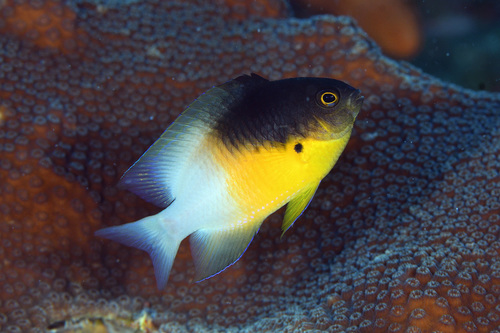
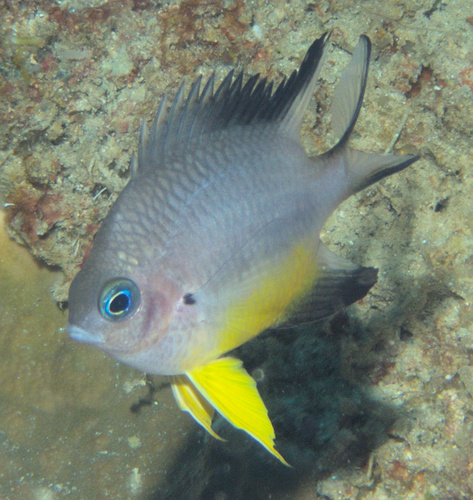
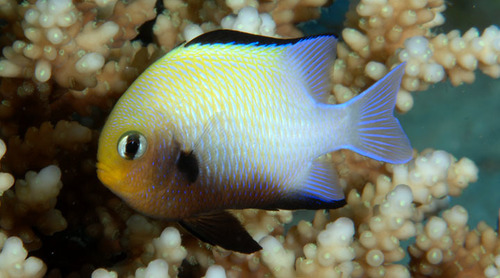
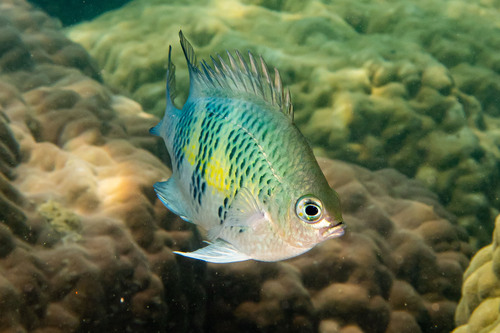
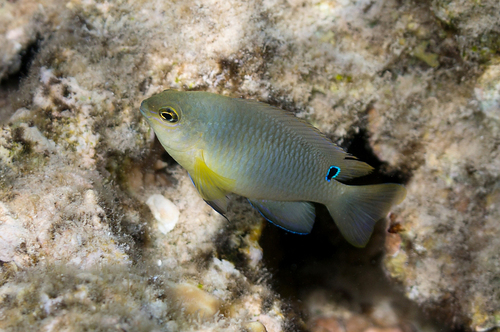
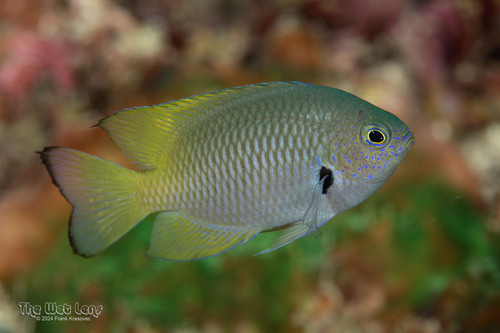
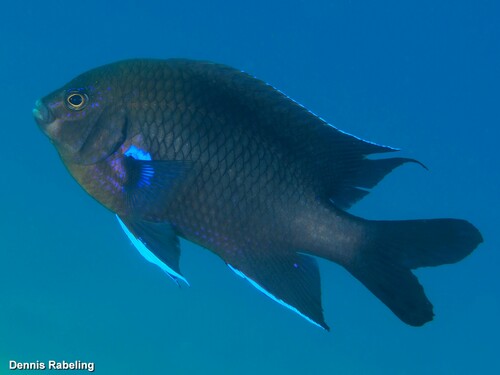
Similiparma lurida, commonly known as the Canary damsel, has large eyes.
Body Coloration
Its body is primarily black to brownish-black, with lighter coloring on the ventral region and blue edges along its fins.
Juvenile Markings
Juvenile individuals may also have lateral stripes across their bodies.
Sexual Dimorphism
Adult Canary damsels display sexual dimorphism during their mating season.
Maximum Length
Fully grown individuals can reach a maximum length of 15 centimetres.
General Habitat Range
Canary damsels live in the eastern Atlantic Ocean, most commonly associated with rocky inshore areas.
Specific Distribution Locations
They are specifically found in the waters of Macaronesia, which includes Madeira, the Azores, the Savage Islands, and the Canary Islands, as well as around Cape Verde and Senegal.
Depth Range
They can be found at depths up to roughly 25 metres (82 feet), while juveniles often occur in tide pools.
Egg Characteristics
Canary damsel eggs are demersal, meaning they attach to underwater substrates.
Nesting & Parental Care
The eggs are laid inside a prepared nest, and the male parent guards the nest to protect the eggs.