About Simarouba glauca DC.
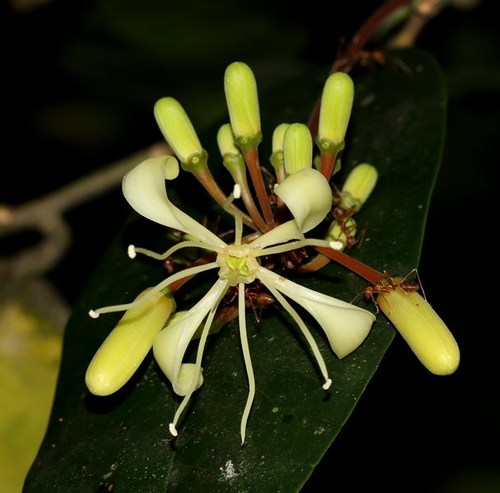
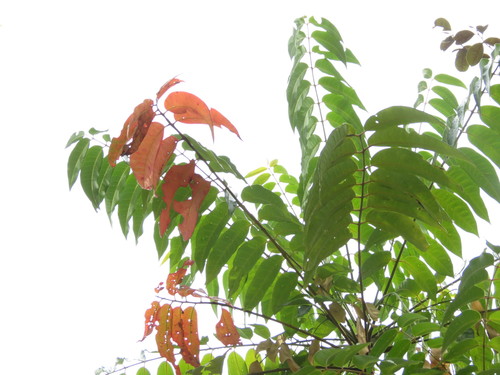
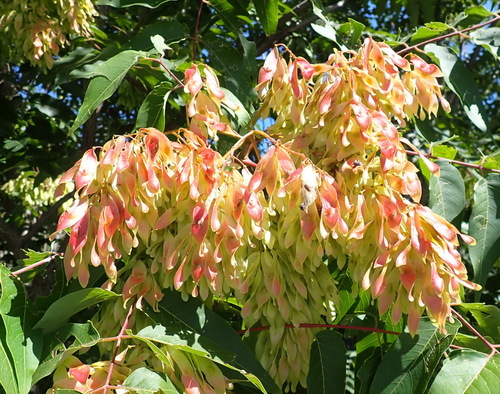
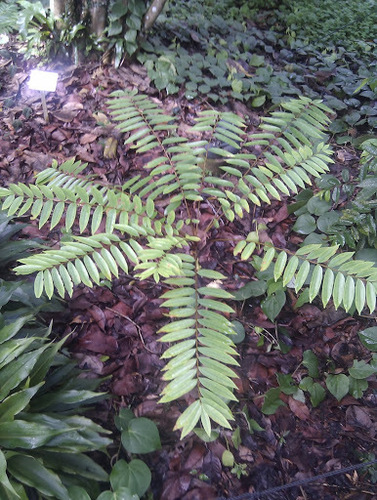
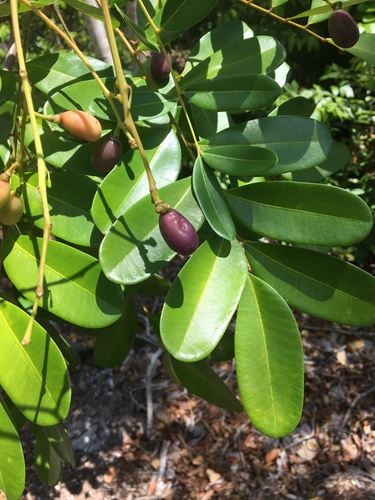
Simarouba glauca DC. is a flowering tree native to Florida, South America, and the Caribbean. Its common names are paradise-tree, dysentery-bark, and bitterwood. This species grows well in warm, humid tropical regions. Its cultivation success depends on rainfall distribution, the water holding capacity of soil, and sub-soil moisture. It tolerates a temperature range between 10 to 40 °C (50 to 104 °F), and can grow at elevations from sea level up to 1,000 m (3,300 ft). Mature trees reach a height of 12 to 15 m (40 to 50 ft), with a canopy span of 7.6 to 9.1 m (25 to 30 ft). It produces yellow flowers, and purple elongated oval fleshy fruits. Simarouba glauca can be propagated via seeds, grafting, and tissue culture. Ripe fruits are collected in April and May, then dried in the sun for approximately one week. After the fruit skin is removed, seeds are grown in plastic bags to produce saplings. When saplings are 2 to 3 months old, they can be transplanted to a plantation. The wood of Simarouba glauca is naturally insect resistant. It is used to make quality furniture, toys, and matches, and is processed into pulp for paper manufacturing. The species also has industrial uses in the production of biofuel, soaps, detergents, lubricants, varnishes, cosmetics, and pharmaceuticals. It has been claimed to have medicinal uses, including treating diarrhea, stomach upset, and malaria as well as other conditions, but there is no scientifically verified evidence that it is effective for any of these uses.