About Silene antirrhina L.
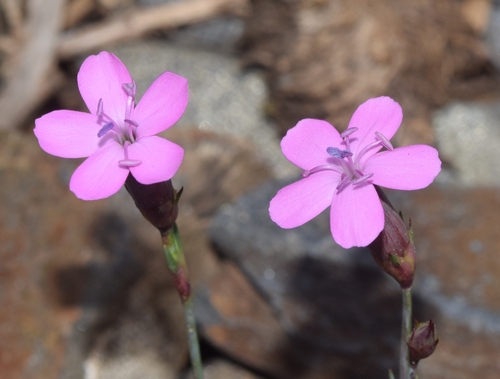
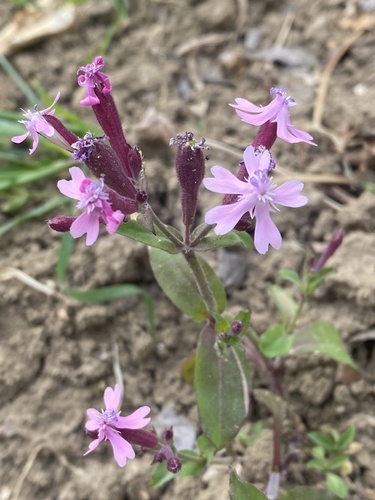
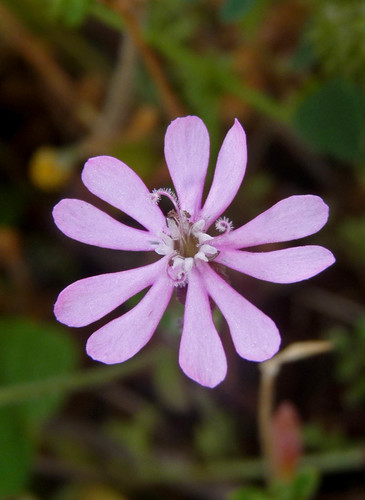
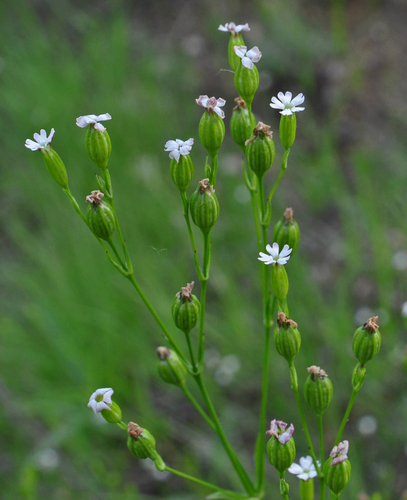
Silene antirrhina L. varies widely in appearance, because its morphology is shaped by several environmental factors including moisture level and available nutrient content. Overall, this is an annual herb that grows upright to a maximum height of around 80 centimeters, which is 31 inches. Its slender stem grows from a taproot, and produces branches near its top. The stem has dark-colored internodes; the upper internodes are often glandular and sticky in texture. This is a protocarnivorous plant, and insects can get trapped in its sticky stem patches, but the plant does not absorb any nutrients from these trapped insects. Its leaves are lance-shaped. Leaves near the base of the stem can grow up to 6 centimeters, which is 2 and 1/4 inches, long, while leaves growing higher on the stem are smaller and narrower. Each flower is wrapped in an inflated ovate calyx made of fused sepals that has ten veins. The calyx is open at its top, and often shows five double-lobed petals that can be pink, red, purple, or white; petals are sometimes absent entirely. This species is native to the Americas. It is widespread across all of North America and occurs in parts of South America. It is an introduced species in Europe. It can grow in a very broad range of habitat types, including disturbed areas and areas that have been recently burned. It is sometimes considered a weedy species.