About Sida fallax Walp.
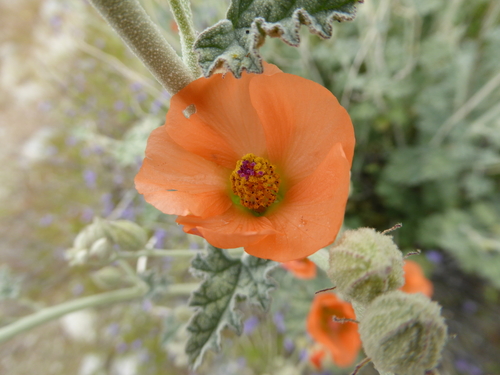
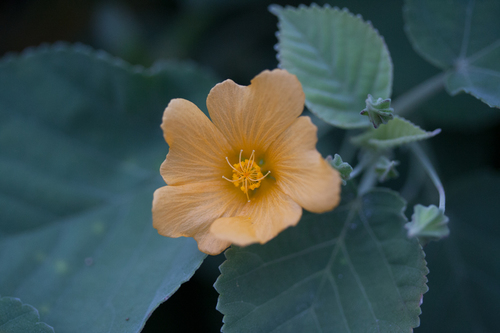
Sida fallax Walp., commonly known as ʻilima, produces small flowers measuring 0.75–1 inch (1.9–2.5 cm) in diameter. Each flower has five petals, and their color ranges from golden yellow to orange. ʻIlima grows between 6 inches (150 mm) and 10 feet (3.0 m) tall, and occurs in two main growth forms: prostrate, which grows on beaches, and erect, which forms an upland shrub. Lowland prostrate ʻilima is called ʻilima papa, and it has silver-green foliage, while mountain varieties have smooth, green foliage. Its leaves can be long and narrow, rounded, or heart-shaped, with finely to coarsely serrated margins. Flowers may grow alone or in small clusters.
Native Hawaiians traditionally used ʻilima flowers to make lei, and this species is possibly the only plant that was cultivated specifically for lei-making in ancient Hawaiʻi. Around 1,000 ʻilima blossoms are required to make one single strand of a lei. Today, ʻilima is grown commercially as a flower crop for lei and garlands in Hawaiʻi and Kiribati; while it was once only used to make lei worn by royalty, it can now be worn by anyone. The flowers are sometimes also used as a food garnish. In Nauru, flowers and tender meristems are sometimes used to add scent to coconut oil. Its stems are used to weave rough baskets and floor coverings, and for thatching houses. In Hawaiʻi, ʻilima bushes are used to help prepare swamp taro beds. In Kiribati, dried leaves and flowers are used as fertilizer, mulch, and occasionally compost. Sida fallax is sometimes planted as a groundcover in tropical regions. Traditionally, ʻilima was used medicinally to ease pregnancy and as a mild laxative. The flowers were also used in magical practices, especially love magic; for example, in Kiribati S. fallax flowers are mixed with coconut milk and bark from Premna serratifolia trees to encourage true love.