About Sida cordifolia L.
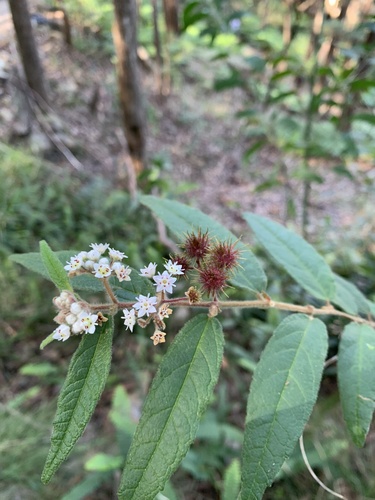
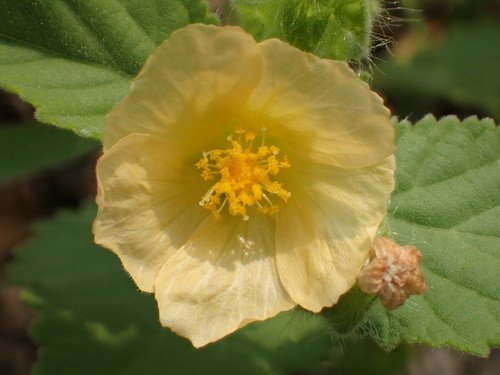
Sida cordifolia L. is an erect perennial herb that grows 50 to 200 cm (20 to 79 in) tall. The entire plant is covered in soft white felt-like hairs, which gives it one common name: "flannel weed". Its stems are yellow-green, hairy, long, and slender. Its yellow-green leaves are oblong-ovate, covered with hairs, and measure 3.5 to 7.5 cm (1.4 to 3.0 in) long by 2.5 to 6 cm (0.98 to 2.36 in) wide. The flowers are dark yellow, sometimes with a darker orange center, and have a hairy 5-lobed calyx and a 5-lobed corolla. As a weed, it invades cultivated and overgrazed fields, where it competes with more desirable species and contaminates hay. Sida cordifolia is used in Ayurvedic medicine, where it is called BALA in Sanskrit. In Brazilian folk medicine, it is known as "malva branca" and is used to treat inflammation of the oral mucosa, blennorrhea, asthmatic bronchitis, nasal congestion, stomatitis, and asthma. In many parts of Africa, it is used for various ailments, particularly respiratory problems. It has been researched for potential use as an anti-inflammatory agent, for preventing cell proliferation, and for encouraging liver re-growth. Due to its ephedrine content, it has psychostimulant properties that affect the central nervous system and the heart.