About Sibbaldia tridentata (Aiton) Paule & Soják
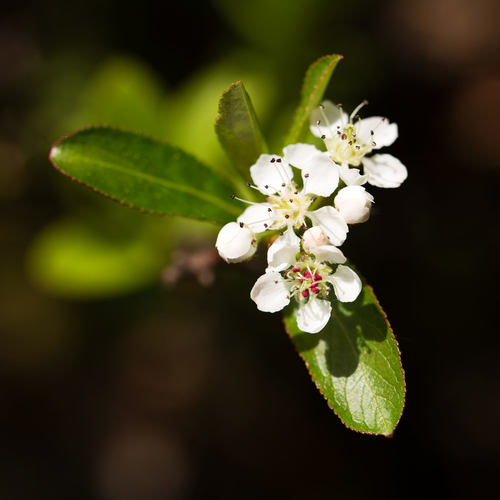
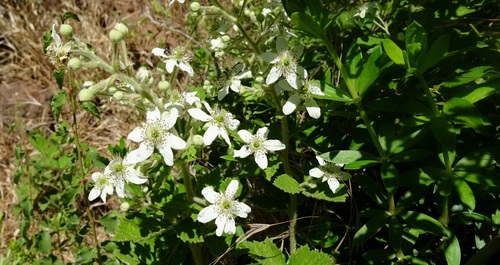
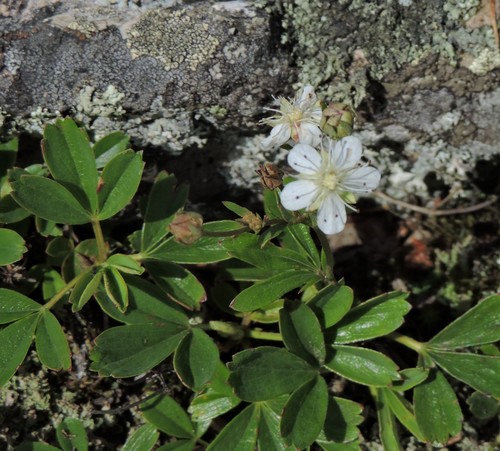
Sibbaldia tridentata is a short evergreen perennial plant that reaches a maximum height of 25 cm (10 inches). Its leaves are compound and trifoliate, typically growing in an alternating pattern at the base of the plant. Each leaflet grows up to 3.8 cm (1.5 inches) long and 1.3 cm (0.5 inches) across. Leaflets are shaped oblanceolate, with a truncated tip that bears three teeth. The leaves are glossy and evergreen, and turn deep red in the fall when the plant is grown in full sun. Branches are herbaceous and covered in fine hairs, while the roots are woody. Flowers are small, white, and radially symmetrical. They are arranged in a compound bracteate cyme, and each flower has five sepals, five petals, several stamens, and a small number of pistils. Individual flowers of this species resemble flowers from the genus Potentilla. The blooming period lasts between two and three months, occurring from June to August. After flowering, the triangular sepals fold inward, and tiny, hairy brown seeds develop inside the folded structure. Sibbaldia tridentata prefers dry, acidic soil in full sun, most often on rocky or gravelly shores. It is frequently found growing on shale outcrops. Its range covers most central to eastern U.S. states, with isolated disjunct populations extending along the Appalachian Mountains. It also grows in all Canadian provinces east of and including Alberta, as well as Greenland. In Nova Scotia, it is very common in central Annapolis Valley and around cliffs and rocky outcrops. The southernmost confirmed populations are found in Georgia and North Carolina, where they grow on high-elevation rock outcrops and grassy balds. This species is listed as endangered in five U.S. states.