About Setaria sphacelata (Schumach.) Stapf & C.E.Hubb. ex Moss
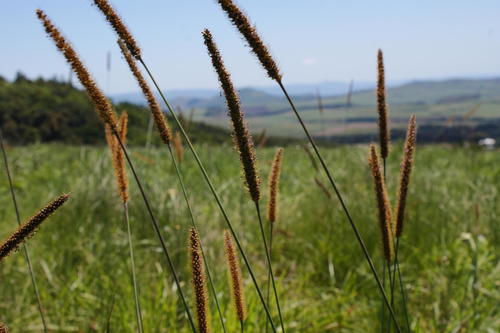
Setaria sphacelata (Schumach.) Stapf & C.E.Hubb. ex Moss, a tall African grass, is also commonly called South African pigeon grass and African bristlegrass. It is native to tropical and subtropical Africa, and is extensively cultivated around the world as a pasture grass and for cut fodder. This rhizomatous perennial grass grows flattened, hairless, blue-green stems that can reach up to 2 meters tall. Its inflorescence is a dense, narrow panicle holding bristly, orange-tinged spikelets, with the whole structure reaching up to 25 centimeters long. In Africa, the seed heads of this grass are an important food source for multiple bird species, including the long-tailed widowbird. Commercial cultivars of Setaria sphacelata have been developed to suit a variety of climates and soil conditions. All of these cultivars are high in oxalate, which makes them generally unsuitable feed for horses. Recognised pests that affect cultivated Setaria sphacelata include the buffel grass seed caterpillar (Mampava rhodoneura) and the fungus Pyricularia trisa. The grass is good quality forage for ruminants such as cattle, sheep and goats, and it can be fed fresh or ensiled. Setaria sphacelata has become naturalized in many countries, and it is classified as a significant environmental weed in three Australian states.