About Setaria adhaerens (Forssk.) Chiov.
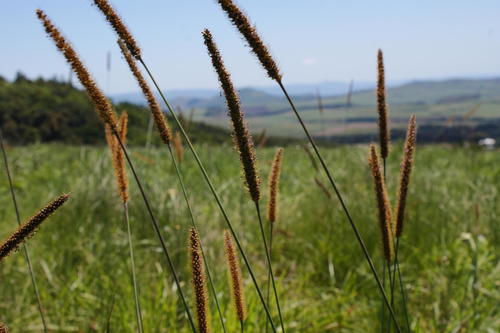
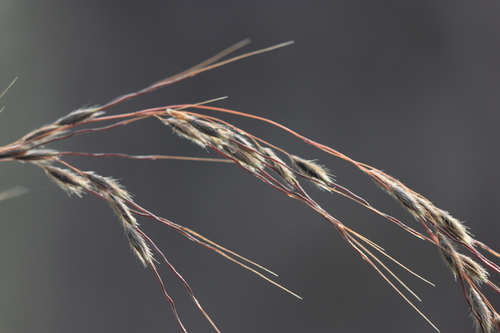
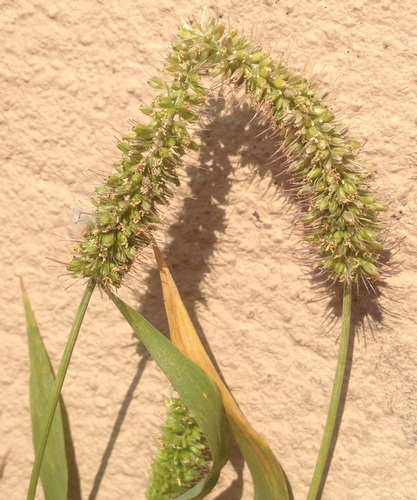
Setaria adhaerens (Forssk.) Chiov. is a grass species. Its inflorescence is cylindrical, covered in long hairs, and tends to droop when ripe. Its seeds are less than 6 millimetres (1⁄4 inch) in length.
The grains of this species can be eaten raw, but they are hard and may taste bitter; boiling can reduce both hardness and bitterness. Throughout history, several other Setaria species have been domesticated and used as staple crops: these include foxtail millet (S. italica), korali (S. pumila) grown in India, and Setaria macrostachya grown in Mexico before maize was fully domesticated. Several Setaria species are still cultivated today as food or animal fodder, such as foxtail millet and korali (S. pumila), while other Setaria species are considered invasive weeds. S. italica and S. viridis are currently being developed as genetic model systems for the study of monocots and bioenergy grasses. Additional Setaria species that have been cultivated as crops include S. palmifolia (highland pitpit), which is cultivated as a green vegetable in Papua New Guinea; S. parviflora (knot-root foxtail), which was historically cultivated in Mesoamerica; and S. sphacelata (African bristle grass) from Sudan, a "lost millet" of Nubia.