About Sesbania grandiflora (L.) Poir.
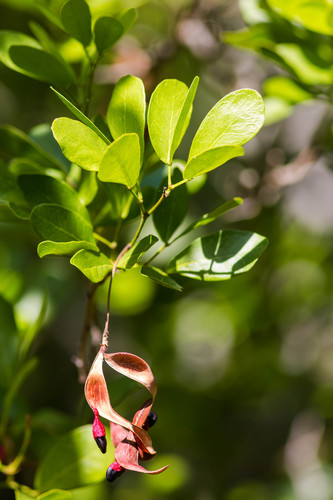
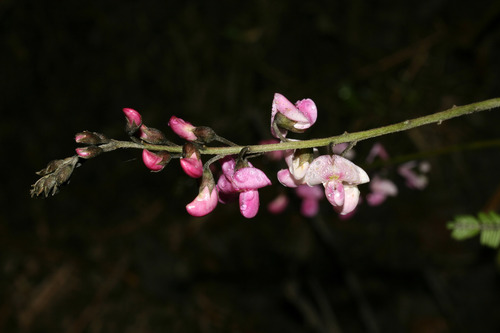
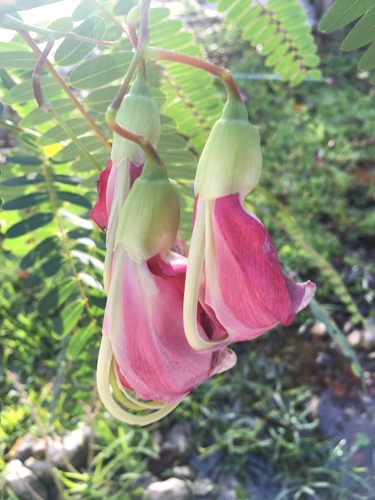
Sesbania grandiflora is a fast-growing, soft-wooded leguminous tree in the family Fabaceae that reaches heights of 5–20 metres (16–66 feet). Its leaves are arranged regularly, have rounded leaflets, and grow 15–30 cm (6–12 in) long. Leaves hold 10–20 or more pairs of leaflets, plus an additional terminal leaflet. Flowers can be white, red, or pink, are oblong, and 1.5–10 cm (1–4 in) long. They form lax racemes that hold 2 to 4 flowers, and have a mild fragrance. The calyx is bell-shaped and shallowly divided into two lips. The fruits, which are seed pods, resemble long, thin, flat green beans. The pods are slender, and can be either curved (falcate) or straight, measuring 30–45 cm (12–18 in) long with a thick suture. Each pod holds approximately thirty seeds that are 8 mm (0.3 in) long. This tree grows best in full sunlight and is extremely sensitive to frost. It is native to the region from Maritime Southeast Asia (including Malaysia, Indonesia, Philippines, Brunei) to New Guinea. It is cultivated across many parts of South India and Southeast Asia, and grows in areas with good soil and a hot, humid climate. Consumption of its seeds can be deadly to chickens. Sesbania grandiflora has many traditional uses. Its flowers are composed of 92% water, 7% carbohydrates, 1% protein, and contain no fat. In a 100 gram (3.5 oz) reference serving, the flowers provide 27 calories, and are a rich source of vitamin C (providing 88% of the Daily Value, DV) and folate (providing 26% DV).