About Serinus canicollis (Swainson, 1838)
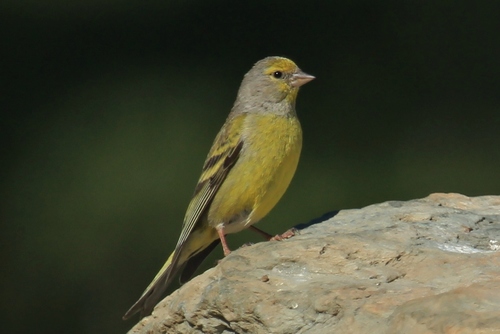
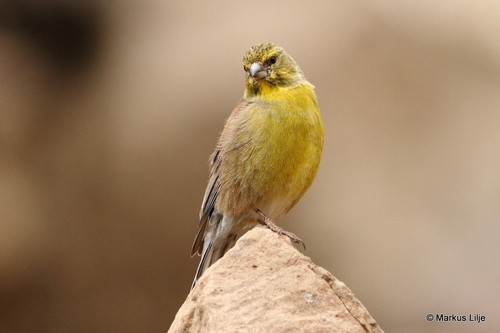
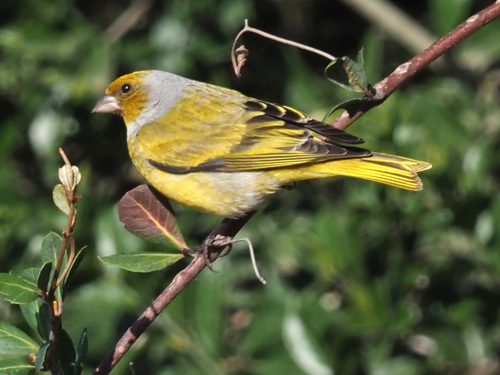
The Cape canary, scientifically named Serinus canicollis, is a small passerine bird belonging to the finch family. It is a resident breeding species native to southern Africa, and has been introduced to the islands of Mauritius and Réunion. Its preferred habitats are fynbos, grassland and gardens, located mostly in highland areas. It constructs a compact cup-shaped nest in scrub vegetation. The Cape canary measures between 11 and 13 cm in total length. Adult males have a green back, with black edging along the feathers of the wings and tail. Their underparts, rump, and the sides of the tail are yellow, while the lower belly is white. The back of the head and the neck are grey, and the face is a cinnamon color. Females have similar markings to males, but display less grey coloration on the head. Juveniles have greenish-yellow underparts covered in heavy brown streaking. This species can be easily distinguished from the yellow-fronted canary by its complete lack of black markings on the face. The Cape canary is a common, gregarious seed-eating bird. Its call is a sharp tsit-it-it, and its song consists of warbled trills and whistles similar to those of a goldfinch, produced during display flight or when perched on a high exposed perch.