About Sericocarpus linifolius (L.) Britton, Sterns & Poggenb.
Nomenclature
Sericocarpus linifolius (L.) Britton, Sterns & Poggenb. produces a smooth, slender stem that grows 30 to 75 centimeters tall.
Stem Characteristics
Its leaves are sessile, measuring 2.5 to 5 centimeters long and only 3 to 6 millimeters wide. The leaves are thick, with rough edges.
Leaf Characteristics
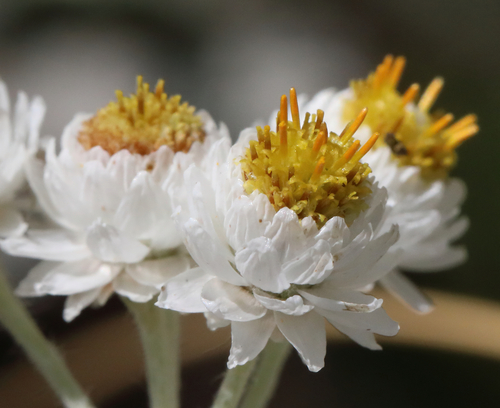
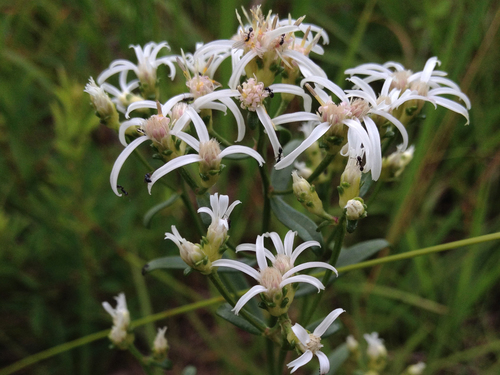
Its flower heads grow on branches arranged in a flat-topped cluster. Each flower head contains 5 to 15 disk flowers and 2 to 6 ray flowers, which are roughly one centimeter long.
Inflorescence Structure
The species produces cypselae fruits with a pappus made of white bristles.
Fruit Characteristics
This plant is widely distributed across the eastern United States, though its local distribution may be spotty. It has been recorded in Alabama, Connecticut, Washington, D.C., Delaware, Georgia, Indiana, Kentucky, Louisiana, Massachusetts, Maryland, Mississippi, North Carolina, New Hampshire, New Jersey, New York, Ohio, Pennsylvania, Rhode Island, South Carolina, Tennessee, Virginia, and West Virginia.
Distribution Range
It is listed as an endangered species in the state of Pennsylvania, and classified as threatened in Ohio, New Hampshire, and New York.
Conservation Status
In Virginia, it grows in dry woodlands, barrens, riverside prairies, clearings, and meadows.
Virginia Habitat
Its survival relies on the presence of appropriate habitat; it can be eliminated from an area by development, changes in land use, or competition with invasive plant species.