About Serenoa repens (W.Bartram) Small
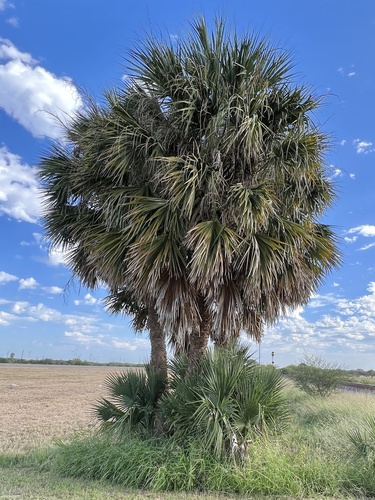
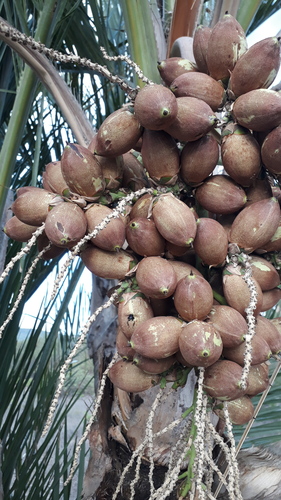
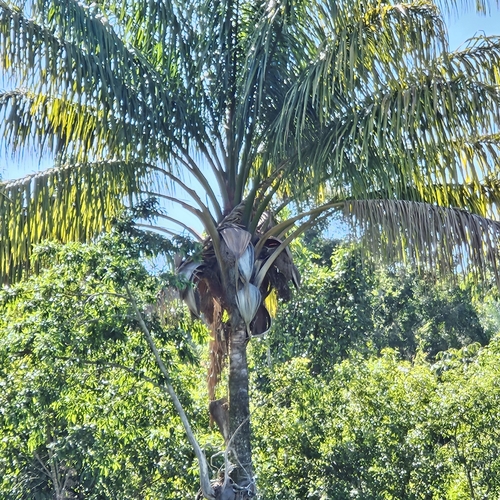
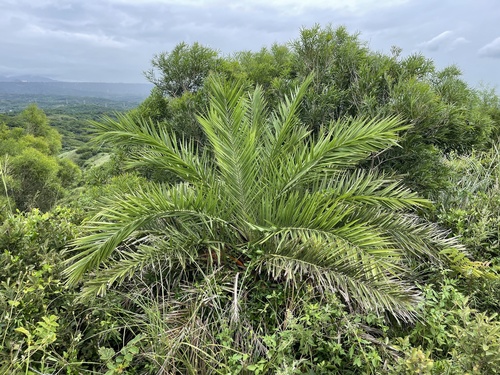
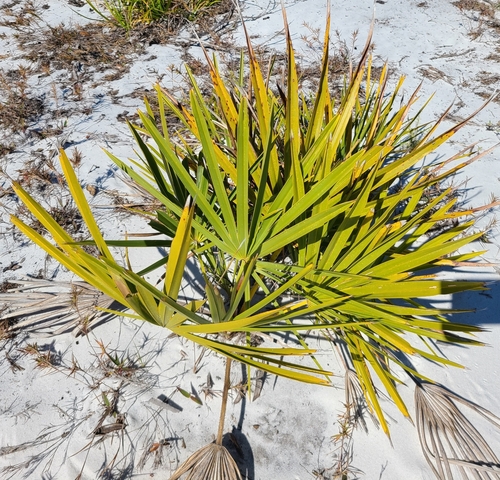
This species, commonly known as saw palmetto, rarely produces erect stems or trunks, though such stems do occur in some populations. It is a hardy, extremely slow-growing, long-lived fan palm; some specimens, particularly those growing in Florida, may be between 500 and 700 years old. Its leaves have a bare petiole that ends in a rounded fan made up of around 20 leaflets. The petiole is lined with fine, sharp teeth or spines, which give the species its common name. These spines can easily break human skin, so protective gear should be worn when working around saw palmetto. Leaf color is light green for plants growing inland, and silvery-white for plants growing in coastal regions. Full leaf length ranges from 1 to 2 meters, while individual leaflets measure 50 to 100 cm long. The leaves of saw palmetto are similar to the leaves of palmettos in the genus Sabal. Its flowers are yellowish-white, around 5 mm across, and grow in dense compound panicles that can reach up to 60 cm in length. This species is endemic to subtropical and tropical areas of the Southeastern United States and Mexico. It is most common along the south Atlantic and Gulf Coastal plains and sand hills. It grows in clumps or dense thickets in sandy coastal areas, and as undergrowth in pine woods or hardwood hammocks. Its fruit is a large reddish-black drupe, which is an important food source for wildlife and was historically used as food by humans. It acts as a food plant for the larvae of some Lepidoptera species, including Batrachedra decoctor, which feeds on the plant, including the interior of its inflorescence. Extract from saw palmetto has been studied as a potential treatment for people with prostate cancer, and for men with lower urinary tract symptoms linked to benign prostatic hyperplasia (BPH). As of 2023, there is no scientific evidence that saw palmetto extract is effective for treating cancer or BPH and its symptoms. A 2016 review of clinical studies focused on a standardized extract of saw palmetto called Permixon found that the extract is safe, and may be effective for relieving BPH-induced urinary symptoms when compared to a placebo.