About Senna siamea (Lam.) H.S.Irwin & Barneby
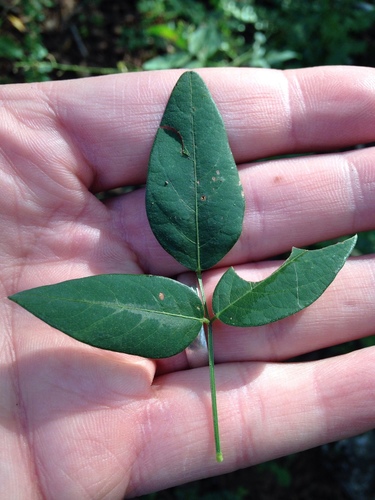
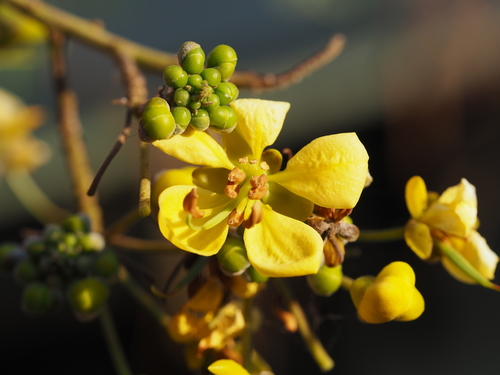
Senna siamea is a medium-sized evergreen tree that grows up to 18 meters (60 feet) and produces yellow flowers. Its leaves are alternate and pinnately compound, with a slender, green axis tinged with reddish tones. Each leaf holds 6 to 12 pairs of leaflets on short stalks, with leaflets rounded at both ends. This species is commonly used as a shade tree in cocoa, coffee, and tea plantations. In Thailand, it is the designated provincial tree of Chaiyaphum Province, and several locations across the country are named after this tree. This plant has medicinal value and contains a chemical compound called barakol. Its leaves, tender pods, and seeds are edible, but they require pre-boiling before consumption, and the boiling water must be discarded. These edible parts are used in both Burmese and Thai cuisine; one well-known Thai preparation made with it is kaeng khilek (Thai: แกงขี้เหล็ก). In traditional Burmese culture, Burmese families pick Siamese cassia buds on the full moon day of Tazaungmon, and prepare them in a salad called mezali phu thoke (မယ်ဇလီဖူးသုပ်) or in a soup. Other non-edible uses for the species include use as a fodder plant, incorporation into intercropping systems, and planting for windbreaks and shelter belts. As a hardwood, it is used for decorative ornamentation on instruments including ukuleles and guitars, and for other decorative products. When used for this purpose, it is often called pheasantwood or polohala, a name inspired by the similarity of the wood's grain to pheasant feathers. It is sometimes used in Chinese furniture, where it is known as jichimu, and is used interchangeably with wood from Ormosia species. Scientific studies have confirmed its medicinal potential, which comes primarily from the anxiolytic properties of its main active chemical, barakol. It is sold in Asian pharmacies, most commonly as a sleep aid, but also to treat constipation and used as a hair balm.