About Senna corymbosa (Lam.) H.S.Irwin & Barneby
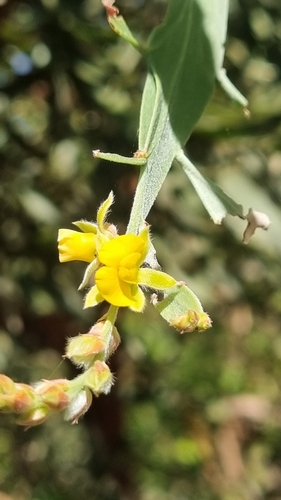
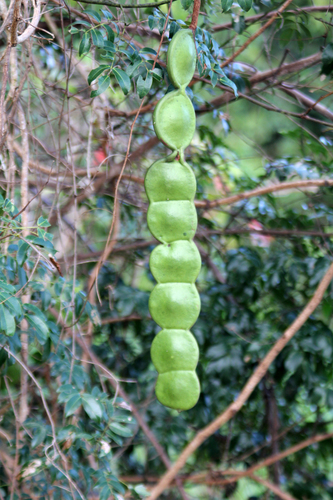
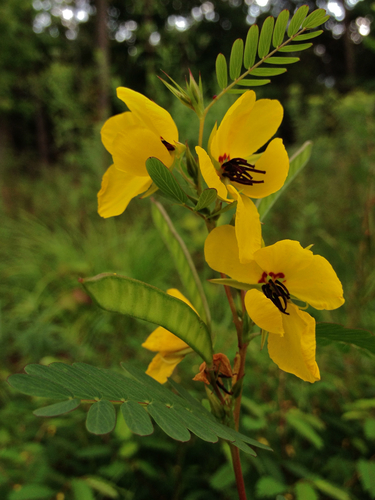
Senna corymbosa (Lam.) H.S.Irwin & Barneby is an evergreen shrub that reaches around one meter in height. It can be cultivated in temperate climates because it is somewhat frost-hardy. In the Northern Hemisphere, this species flowers in July. Its yellow flowers fold in shade and at night. Each flower has 5 sepals, sub-equal petals, 10 very unequal stamens arranged in three groups of 3, 4, and 3, and a strongly upward-curved style. It blooms across summer and autumn, and is visited and pollinated by bumblebees. Its fruit is a hanging, indehiscent, cylindrical legume that measures 6 to 10 cm long and contains many seeds. This plant is native to parts of southeastern South America: it occurs from sea level up to around 200 m above sea level across all departments of Uruguay; in the southern Brazilian states of Rio Grande do Sul and Santa Catarina; across Paraguay; and in eastern Argentina, in the provinces of La Pampa, Córdoba, Santa Fe, Misiones, Corrientes, Entre Ríos, and Buenos Aires, with its native range reaching as far south as the outskirts of Mar del Plata. It also grows wild in Argentina's Tucumán Province. Its native habitat includes wetlands, riverbanks, and mountain edges. It has been introduced to Alabama, the Canary Islands, the Cape Provinces, Florida, Georgia, India, Iraq, Italy, KwaZulu-Natal, Louisiana, Mississippi, the Northern Provinces, Pakistan, South Carolina, Spain, and Texas.