About Senna alata (L.) Roxb.
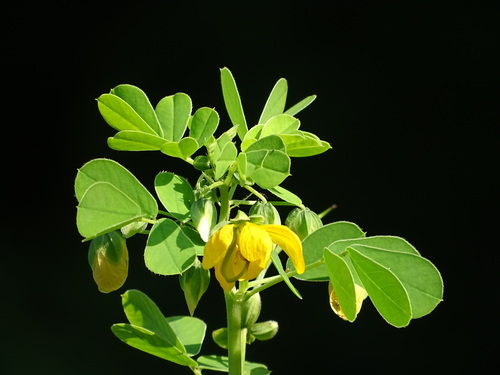
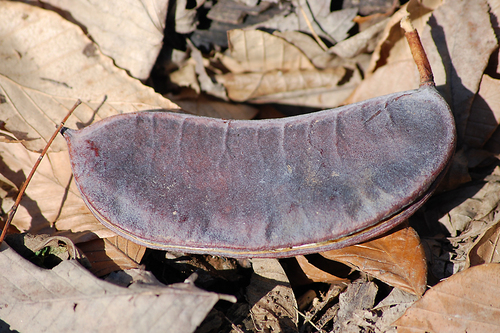
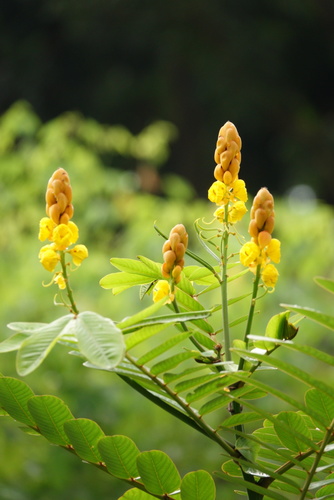
Senna alata (L.) Roxb. is a shrub that reaches 3–4 metres (9.8–13.1 ft) in height. Its leaves are 50–80 centimetres (20–31 in) long, and close during dark periods. Its inflorescence has the appearance of a yellow candle. The fruits are straight, pod-shaped, and grow up to 25 cm long. Mature seed pods are nearly straight, dark brown to nearly black, measuring around 15 centimetres (5.9 in) long and 15 millimetres (0.59 in) wide. A wing runs the full length of the pod along both of its sides. Each pod contains 50 to 60 flattened, triangular seeds. Seeds of this species are dispersed by water or animals. This species is native to most of the Neotropics, ranging from Mexico and the West Indies to Paraguay. It can grow in a wide variety of habitats, and in tropical regions it grows at altitudes up to 1,200 metres (3,900 ft). It is an invasive species in Austronesia, and its introduced distribution ranges from India to the Americas. It has significant ornamental and medicinal value in Southeast Asia, northern Australia, and parts of Africa. Senna alata is easy to grow from seed; seeds can be sown directly, or started in a nursery. Also known by the synonym Cassia alata, this species is often called the ringworm bush because it has very effective fungicidal properties that are used to treat ringworm and other fungal skin infections. To prepare a topical treatment, leaves are ground in a mortar to create a green, cotton-wool-like substance, which is mixed with an equal amount of vegetable oil. The mixture is rubbed onto the affected area two or three times a day, and a fresh preparation must be made each day. Its active ingredients include the yellow compound chrysophanic acid. It also has a well-documented laxative effect, caused by its anthraquinone content. In the Philippines, this species is locally known as akapulko, where it is grown as both an ornamental and medicinal plant for its laxative, purgative, and anti-fungal properties. In Sri Lanka it is known as Ath-thora (ඇත්තෝර), and is used as an ingredient in Sinhala traditional medicine. In Malaysia, it is called Gelenggang, and the Yoruba people of West Africa refer to it as ewe àsùnwòn.