About Senegalia galpinii (Burtt Davy) Seigler & Ebinger
Classification and Native Range
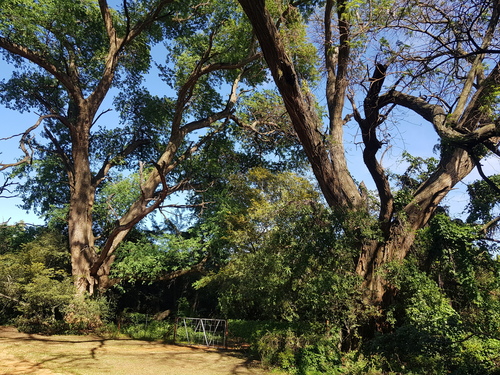
Senegalia galpinii is a deciduous tree that belongs to the Fabaceae family. Native to southern Africa, it can be found in countries such as South Africa, Zimbabwe, and Mozambique.
Size and Crown
The tree can grow up to 10 meters tall and features a spreading crown with a diameter of up to 8 meters.
Leaf Structure
The leaves of Senegalia galpinii are bipinnate, meaning they are divided into smaller leaflets arranged in pairs along the stem. The leaflets themselves are small, oval-shaped, and have pointed tips.
Flowering Period and Traits
Flowering from July to September, Senegalia galpinii produces small, yellowish-white flowers that grow in clusters at the ends of branches. These flowers, with their sweet fragrance, attract bees for pollination.
Fruit Characteristics
The fruit of Senegalia galpinii is a flat pod containing several seeds. These pods ripen from October through December before splitting open to release their seeds.
Fuel and Shade Uses
Senegalia galpinii has several uses, including as firewood due to its dense wood, which burns slowly with little smoke or sparking. It also provides shade for livestock grazing beneath it.
Bark and Medicinal Uses
Additionally, its bark contains tannins used for tanning leather, and its leaves have medicinal properties traditionally utilized by indigenous people to treat various ailments such as coughs, colds, or fevers.
Ecological and Cultural Importance
Overall, Senegalia galpinii is an important plant species due to its ecological significance and cultural importance among indigenous communities, who rely on it for various purposes including medicine-making and fuelwood production.