About Senegalia catechu (L.f.) P.J.H.Hurter & Mabb.
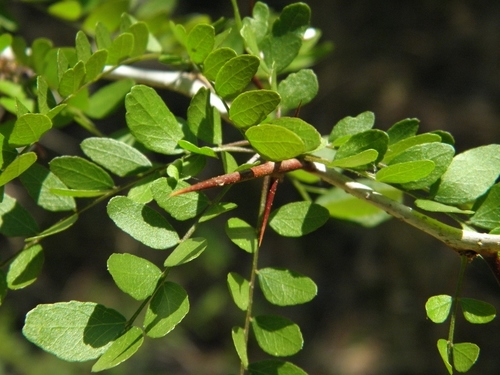
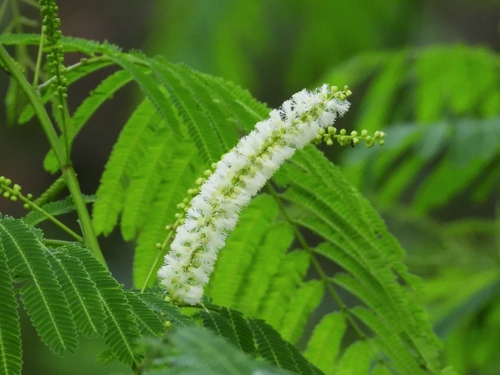
Senegalia catechu (formerly classified as Acacia catechu) is a deciduous, thorny tree that reaches up to 15 meters (50 feet) tall. In the Malay language, this plant is called kachu; this Malay name was Latinized to "catechu" for Linnaean taxonomy, because this is the species that the extracts cutch and catechu are obtained from. Other common names for the species include kher, catechu, cachou, cutchtree, black cutch, and black catechu. Senegalia catechu is native to South Asia and Southeast Asia, including the Indian subcontinent, Myanmar, Cambodia, and Yunnan, China. Because of the flavanol derivatives found in its extracts, this species gave its name to the important chemistry and biology compounds catechins, catechols, and catecholamines.
Regarding food uses, the tree's seeds are a good source of protein. Kattha (also called catechu), an extract from the tree's heartwood, adds a distinctive flavor and red color to paan. Paan is a traditional Indian and Southeast Asian preparation of betel leaf (Piper betle) chewed with areca nut and slaked lime paste.
In folk traditional medicine, the heartwood, bark, and wood extract (called catechu) of Senegalia catechu are used. The concentrated aqueous extract of the tree, known as khayer gum or cutch, acts as an astringent.
Other uses for the species include: its heartwood extract is used in dyeing and leather tanning, as a preservative for fishing nets, and as a viscosity regulator for oil drilling. Its flowers are a good source of nectar and pollen for bees.
For cultivation, Senegalia catechu can be propagated by planting its seeds, which are first soaked in hot water. After growing for approximately six months in a nursery, the seedlings are ready to be planted in the field.