All Species Plantae

Senegalia berlandieri (Benth.) Britton & Rose is a plant in the Fabaceae family, order Fabales, kingdom Plantae. Toxic/Poisonous.

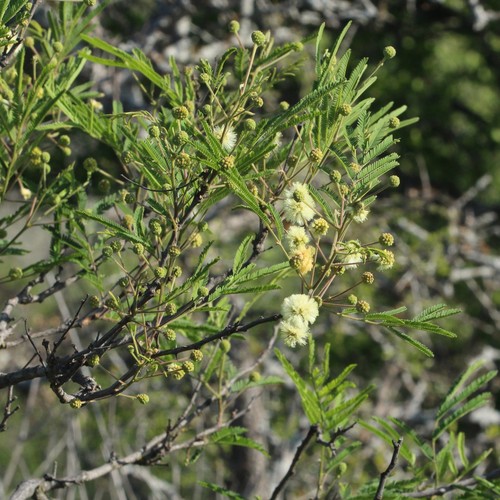
Photo of Senegalia berlandieri (Benth.) Britton & Rose (Senegalia berlandieri (Benth.) Britton & Rose)
Plantae ⚠️ Poisonous

Senegalia berlandieri (Benth.) Britton & Rose

Senegalia berlandieri (Benth.) Britton & Rose

Senegalia berlandieri is a toxic North American Fabaceae shrub sometimes illegally used as a replacement for Acacia rigidula in adulterated supplements.

Identify with AI — Offline
Family
Genus
Senegalia
Order
Fabales
Class
Magnoliopsida

⚠️ Is Senegalia berlandieri (Benth.) Britton & Rose Poisonous?

Yes, Senegalia berlandieri (Benth.) Britton & Rose (Senegalia berlandieri (Benth.) Britton & Rose) is classified as poisonous or toxic. Toxicity risk detected (mainly via ingestion); avoid direct contact and ingestion. Never consume or handle this species without proper identification by an expert.

About Senegalia berlandieri (Benth.) Britton & Rose

Nomenclature and Classification

Senegalia berlandieri, commonly known as Berlandier acacia, guajillo acacia, guajillo, huajillo, and huajilla, is a shrub belonging to the Mimosoid clade of the legume family Fabaceae.

Native Range

It is native to the Southwestern United States and northeastern Mexico.

Size and Flowering

This shrub grows between 1 and 5 metres (3.3 to 16.4 feet) tall, and produces spherical white blossoms from February through April.

Etymology

The specific epithet berlandieri honors Jean-Louis Berlandier, a French naturalist who studied native wildlife of Texas and Mexico.

Alkaloid Content and Toxicity

Senegalia berlandieri contains a wide range of alkaloids, and is known to cause toxic reactions in domestic animals including goats.

Livestock Use Recommendation

Because it is toxic to livestock, it should not be used as forage or fodder.

Dietary Supplement Use

After the U.S. Food and Drug Administration (FDA) declared use of Acacia rigidula unlawful in dietary supplements due to frequent adulteration with synthetic drugs, many supplement sellers began replacing Acacia rigidula with Senegalia berlandieri (often labeled as Acacia berlandieri) in these products.

Supplement Adulteration

Some of these products list their acacia extracts as containing Methylsynephrine, which is an entirely synthetic drug that has never been found in nature.
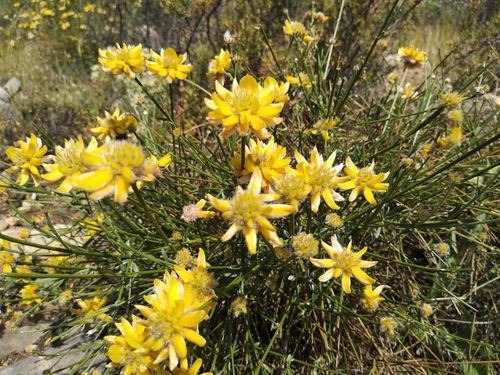
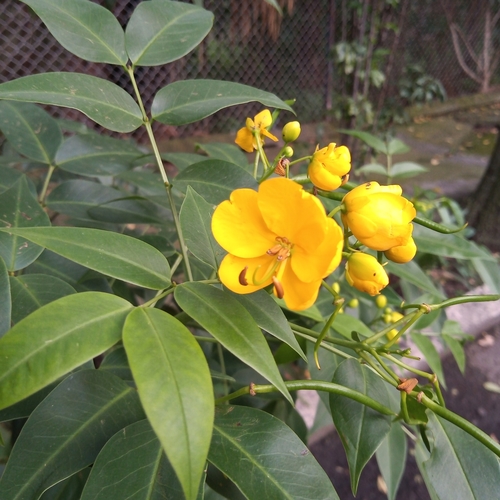
Photo: (c) cameralenswrangler, some rights reserved (CC BY-NC), uploaded by cameralenswrangler · cc-by-nc

Taxonomy

Plantae Tracheophyta Magnoliopsida Fabales Fabaceae Senegalia
⚠️ View all poisonous species →

More from Fabaceae

Sources: GBIF, iNaturalist, Wikipedia, NCBI Taxonomy · Disclaimer

Start Exploring Nature Today

Download iNature for free. 10 identifications on us. No account needed. No credit card required.

App Store
Scan to download from App Store

Scan with iPhone camera

Google Play
Scan to download from Google Play

Scan with Android camera