About Senecio vernalis Waldst. & Kit.
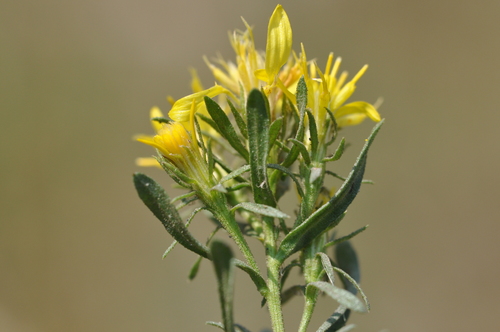
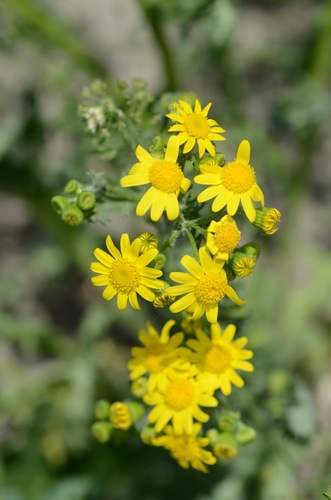
Eastern groundsel, scientifically named Senecio vernalis Waldst. & Kit., is a lovely yellow-flowering weed that grows along roadsides and at field edges. It can sometimes be confused with Senecio eboracensis. Its stems and leaves typically have wavy, dissected leaf blades. The leaf lateral lobes are roughly as long as the width of the central undivided portion of the leaf. Most plants are conspicuously covered in fine hairs, leaf edges are serrated, and leaves grow alternately, with one leaf produced per node along the stem. The oldest recorded stored seed collection of this species was held for 16 years. Germination rate for this collection fell from an initial 100% to a final 82.5%, across a mean storage period of 13 years for all tested seeds. Senecio vernalis is a diploid member of the genus Senecio. It belongs to a species group that also includes S. flavus, S. gallicus, S. squalidus, and S. glaucus. This group is widespread across multiple geographic regions and is of interest for research into genecology, the study of genetic differences in relation to the environment, and plant evolution. This species is native to the Palearctic realm. Its native distribution includes: Western Asia (Cyprus, Iran, Iraq, Israel, Jordan, Lebanon, Syria, Turkey); the Caucasus (Armenia, Azerbaijan, Georgia, Ciscaucasia, Dagestan); Middle Asia (Turkmenistan); Middle Europe (Austria, Hungary, Poland); East Europe (Belarus, Croatia, Estonia, Crimea, Latvia, Lithuania, Ukraine); and Southeastern Europe (Albania, Bulgaria, Greece, Romania, Slovenia, Bosnia and Herzegovina, Montenegro, Serbia, Macedonia, Kosovo).