About Senecio ruwenzoriensis S.Moore
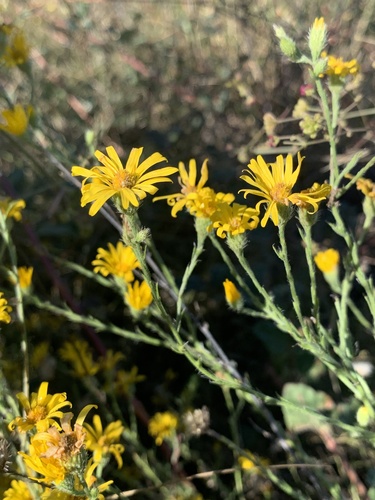
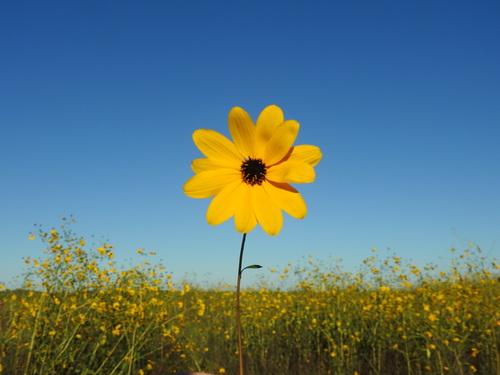
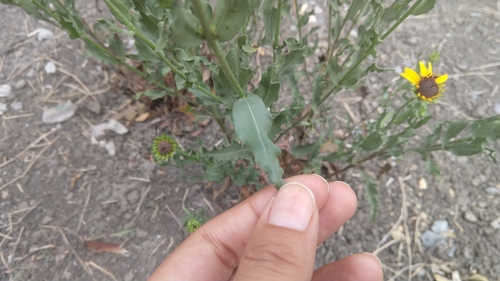
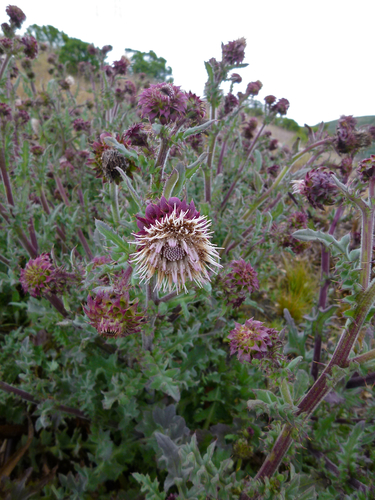
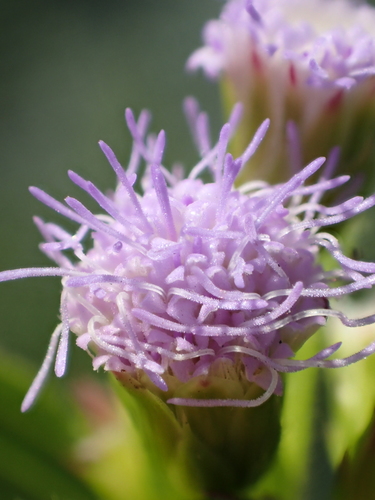
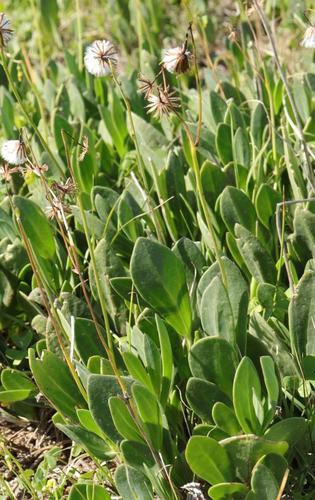
Senecio ruwenzoriensis S.Moore is a perennial herb that grows up to 75 cm (2.46 ft) tall, with tuberous roots. Its leaves are hairless, somewhat fleshy, elongated oval with rounded tips, and feature three veins starting from the leaf base. Leaf margins have sparse, hardened teeth. This species produces bright yellow flowers including both ray and disc florets. Its round flower heads have 8–10 rays and 10–12 leathery bracts, arranged in loose, flat inflorescences held on long stems; the flower stems are leafy at the base. The dry, single-seeded fruits are cylindrical and ribbed. In South Africa, the species is present between December and May. The species has a large overall distribution, but tends to be highly localized within its range. It extends from Swellendam in South Africa to tropical Africa, and can be found in South Africa, Lesotho, Zimbabwe, Malawi, Mozambique, Zambia, Tanzania, Kenya, Uganda and Sudan. It grows in grasslands and shrublands, especially around rocky outcrops, and also occurs on grassy slopes. Originally, South African populations were considered a separate species called Senecio othonniformis, distinct from Kenyan populations. After researchers found both groups contained the same alkaloids, South African populations were reclassified as part of Senecio ruwenzoriensis. There was suspicion that this species poisoned cattle that ate it in Kenya’s Nanyuki district. Two alkaloids from the plant, ruwenine and ruzorine, were extracted and compared to retrosine, another Senecio alkaloid, in tests on rats. Both alkaloids caused liver damage in tested rats, with ruwenine being the more potent of the two. Ruwenine was more harmful to rats than retrosine, while ruzorine was less harmful than retrosine.