About Senecio minimus Poir.
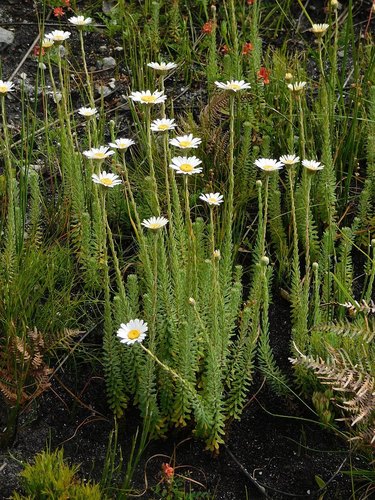
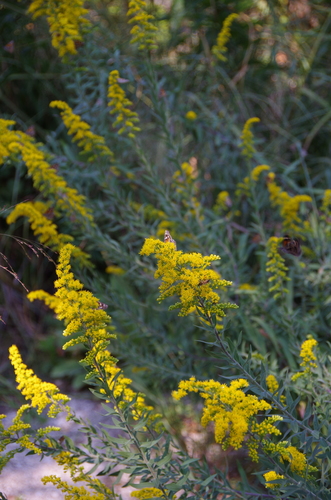
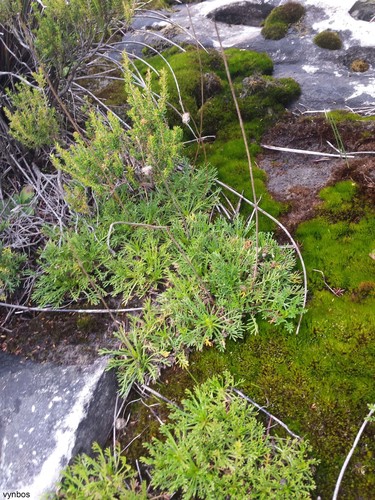
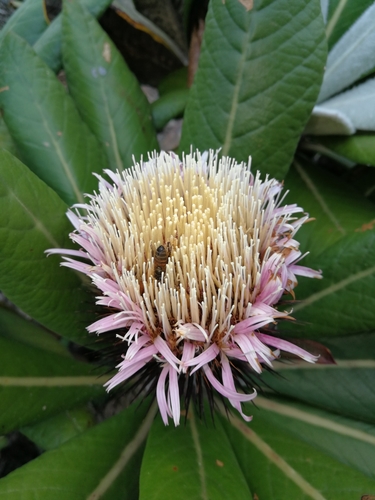
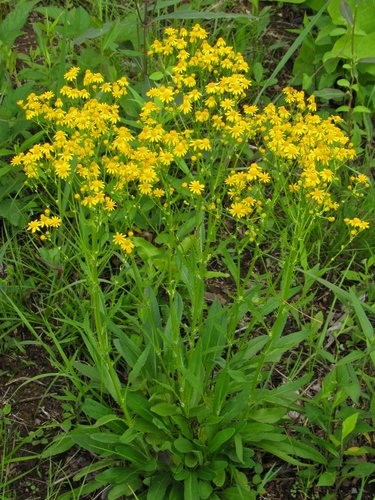
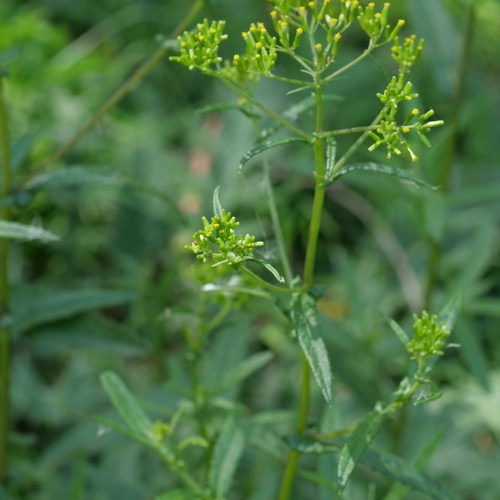
Senecio minimus Poir. is an annual or perennial herb that can grow up to 200 cm (79 in) tall. It has a taproot with branching lateral roots that extend into the surrounding soil. Its stems are erect, coloured dark green-purple, and are divided into a tall upper stem, a mid stem, and a basal stem. Below the mid stem, stems have very small hairs, while the upper stem is more glabrous. Leaf bases grow from the mid stem to support the plant’s leaves, which measure 80-250 mm in length and are spaced evenly along the stem. Leaves are toothed but not pinnately lobed. Upper leaves are narrow and linear, and are widest at the auricles at the leaf base. A single plant can produce up to 200 yellow or purple flower heads. Each flower head holds many small disc florets, with no ray florets. The florets of Senecio minimus have triangular corolla lobes that become thicker toward the apex. This species is distributed across the globe. It is naturally present in the United States in California, Oregon, and Washington, and is found in coastal areas of England. In Australia, it occurs in South-east Queensland, New South Wales, Tasmania, and parts of southwest and southeast Australia. It is indigenous to New Zealand, where it grows in coastal areas of the Chatham Islands and Stewart Island. On the South Island of New Zealand it has been recorded in Marlborough, Nelson, Canterbury, Westland, and Southland; on the North Island it occurs in North and South Auckland, Taranaki, Gisborne, Hawkes Bay, and Wellington. Senecio minimus primarily prefers coastal environments, but in New Zealand it can occasionally extend into subalpine areas. Its typical habitat is associated with forest margins, and it is most commonly found in coastal habitats with forest or bush cover. It also grows in areas with running water and partial sun shade, and can be found in pasture land and tussock areas.