About Senecio madagascariensis Poir.
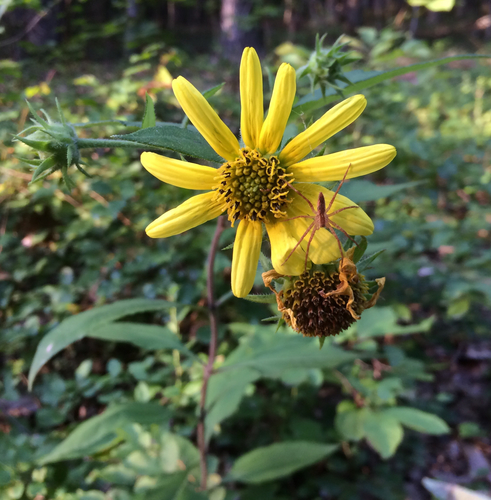
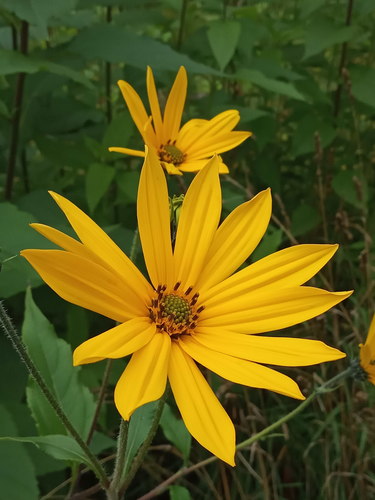
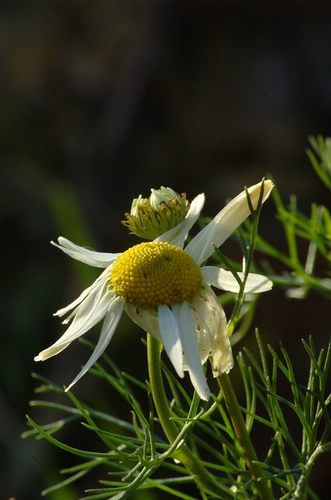
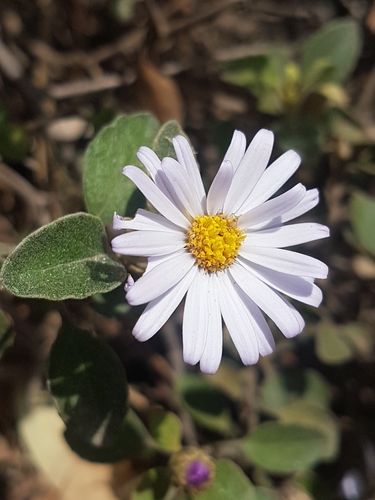
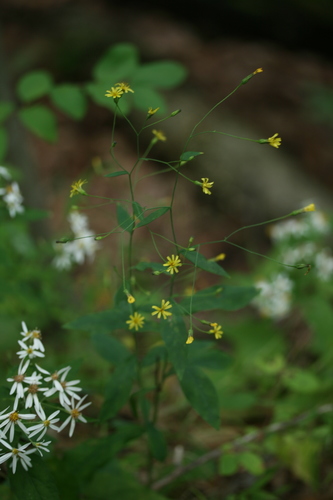
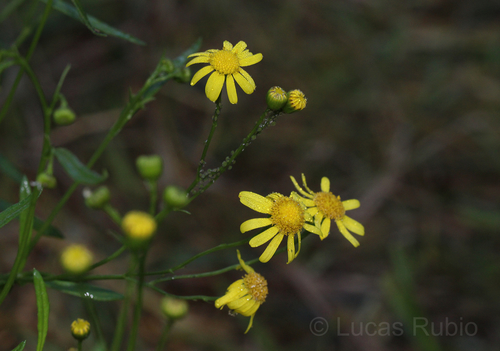
Senecio madagascariensis Poir. is an erect, glabrous, smooth-stemmed herb that grows 20 to 60 cm tall. It can become woody and shrub-like under suitable growing conditions. Its leaves are arranged alternately, and range in shape from narrow-lanceolate to elliptic. Most leaves are bright green, smooth, and have lobed, serrate, or entire margins. Broader, larger leaves of this species are stem-clasping and fleshy, measuring 2–7 cm long and 3–10 mm wide. Its small yellow daisy-like flowerheads grow in a loose corymb, and are made up of both disc florets and ray florets, with a diameter of 1–2 cm. In this plant’s native range, flowering occurs between late autumn and early spring. The fruit produced is a brown achene 1.5–2.5 mm long, with a pappus that measures 4–6.5 mm long. This species grows in pastures, open woodlands, grasslands, suburban bushland, roadsides, disturbed sites, wastelands, parks, and coastal environments within subtropical and warmer temperate regions. It is native to the Afrotropic realm, specifically to South Africa, eSwatini, Lesotho, Madagascar, and Botswana in Southern Africa. It has been introduced to Argentina, Australia, Colombia, Hawaii, Japan, Kenya, Mauritius, Mexico, New Zealand, and Réunion. This species contains pyrrolizidine alkaloids and is poisonous. Horses, cattle, and other livestock are at risk of poisoning from consumption. Symptoms of poisoning include gradual weight loss, jaundice, fluid in the lungs, blindness, sudden death with no other prior symptoms, aimless wandering, impaired muscular coordination, twitching of the head muscles, abdominal straining, rectal prolapse, and irritability.