About Senecio gallicus Chaix
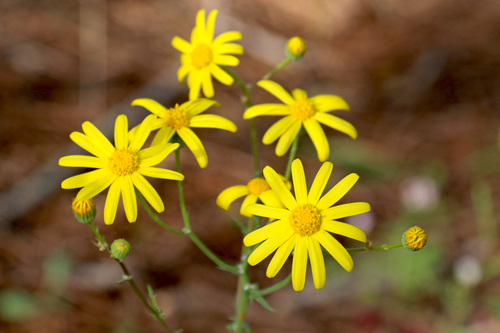
Senecio gallicus Chaix has been the subject of extensive phylogenetic study, as it is an exceptional species among halotypes with a known, species-specific intraspecific phylogeographic structure. Comparisons of allozyme and chloroplast variation in this species show that it persisted in Pleistocene coastal refugia during glacial periods. Related species Senecio alboranicus, commonly called azuzón de Alborán, is reported by the IUCN to be endemic to Isla de Alborán and classified as critically endangered. Isla de Alborán is a 7.1-hectare volcanic extrusion, measuring 600 metres (660 yd) by 265 metres (290 yd). It lies 48 kilometres (30 mi) from the port of Adra, Almería on the Spanish coast, and 39 kilometres (24 mi) from Melilla on the African coast, which was previously part of Morocco. S. alboranicus is one of 26 plant species recorded as growing on the island: 20 are vascular plants, and 6 are lichens, though not all these species were present on the island at the same time. Like most members of the tenacious genus Senecio, this small shrub colonizes disturbed and unstabilized areas. It grows in locations with accumulations of volcanic ash and shell-rich sand, in habitats that have been historically perturbed by both natural events and human activities. Also consistent with traits of the genus, this species produces three plant generations per year, and is non-competitive; its middle generation shares its section of the island with Lavatera mauritanica and Anacyclus alboranensis. Unusually for the genus, S. alboranicus is a halophile that grows in soils with high known salt concentrations. Azuzón de Alborán grows at altitudes between 0 and 15 metres (49 ft). The small size of its island habitat and the rarity of its specific growing conditions make azuzón de Alborán particularly vulnerable to environmental changes. Annual fluctuations in the number of individual plants are driven by climatic conditions such as total rainfall, rainfall distribution, and soil salinity, as well as past human activity including the historical staffing of the island’s lighthouse. These annual fluctuations affect not just the total number of individual plants, but also their size and the number of flowers they produce. Decline of the species can be caused by changes from human activity such as military occupancy and development of artificial environments, alongside natural changes and biotic threats including competition, parasitism, and disease. These changes are not coincidentally the same conditions documented during survey mapping of the island in past years. Isla de Alborán is a protected area, a marine park, and an ecologically important site in the Mediterranean. It receives special protection under the Barcelona Convention, and azuzón de Alborán is listed in Appendix I of the Bern Convention. A permit from the Ministry of Defence is required to visit S. alboranicus on Isla de Alborán. For Senecio gallicus, collected specimens have been found at altitudes ranging from 15 metres (50 ft) to 1,400 metres (4,600 ft) above sea level. Its native distribution in the Palearctic includes southwestern Europe: Alboran, Formentera, Ibiza, Italy, France, Monaco, Morocco, Portugal, Spain. It is both native and naturalized in the Palearctic across the following regions: Western Asia: Israel; Southwestern Europe: Alboran, Formentera, Ibiza, Italy, France, Monaco, Morocco, Portugal, Sicily, Spain; Middle Europe: Belgium; North Europe: Sweden.