About Selidosema brunnearia (Villers, 1789)
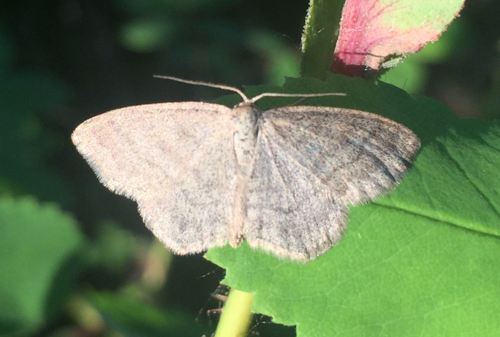
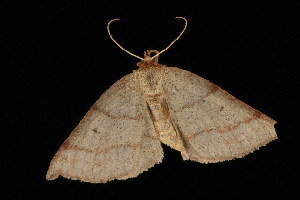
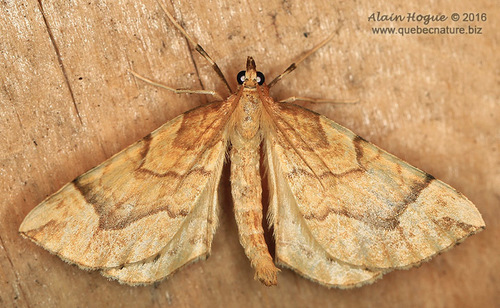
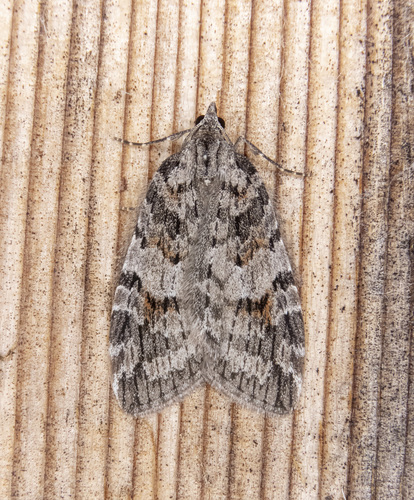
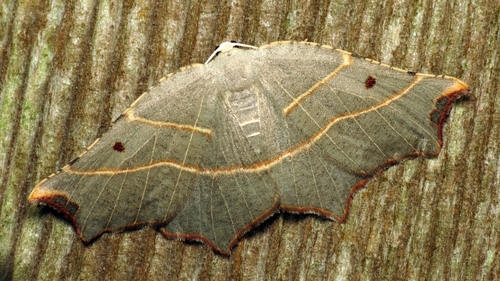
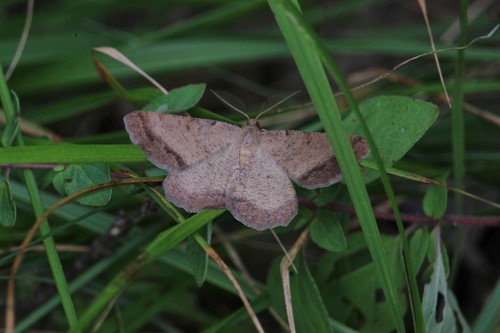
Selidosema brunnearia (Villers, 1789) has a wingspan of 37–43 mm. This moth is brown or purple brown, with dark discal dots or spots. Lines and a distal band are typically visible on the forewing, though these markings vary greatly; no lines are present on the hindwing. Females have much smaller wings than males, a stout abdomen, and moderately distinct markings. Several named forms and variations are recognized: pyrenaearia Boisduval, 1840, found in the Pyrenees and Spain, has a very strongly expressed dark median line, but its dark marginal band is underdeveloped. pallidaria Staudinger, 1901, from Sicily, Dalmatia and surrounding areas, is a very weakly marked, ash-grayish whitish form. syriacaria Staudinger, from Syria, shares a similar pale ground color with pallidaria, but its discal spots, forewing median line, and submarginal bands are all well developed. scandinaviaria Stgr., from Scandinavia, is dark violet-grey, with a present median line and broad distal bands. oelandica Wahlgren, from Oeland, is a modification of scandinaviaria, possibly paler dark grey, with an additional dark band that fills the entire space between the black median and postmedian lines; it may not be separable from the next form. oliveirata Mabille, 1876, from Portugal, is similar to scandinaviaria, but has a broad fuscous median band on the forewing. granataria Ebr., found in Andalusia, appears to also be an aberration of plumaria, with a forewing median shade made up of three spots and an unusually distinct pale subterminal line. The larva of Selidosema brunnearia is naked, light yellow-brown, with narrow light longitudinal stripes and scattered round dark spots.