About Selenia lunularia (Hübner)
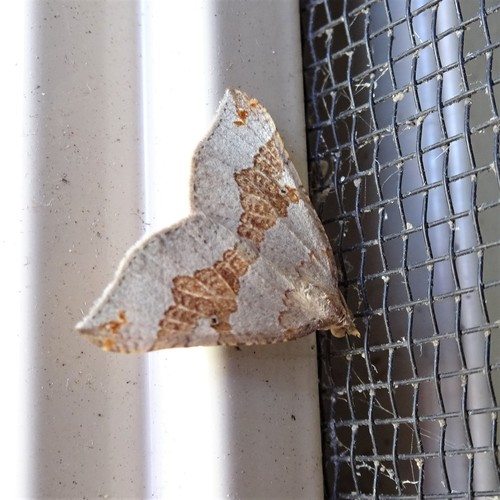
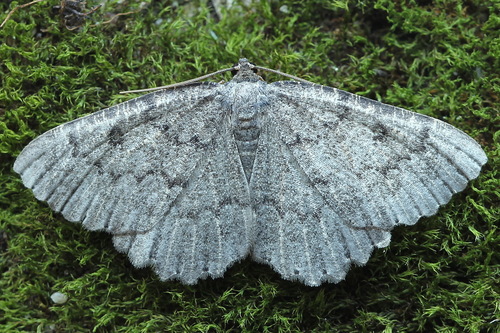
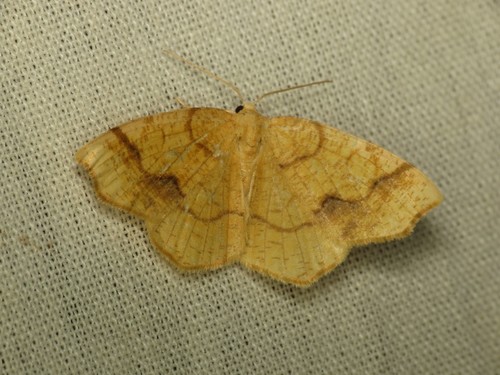
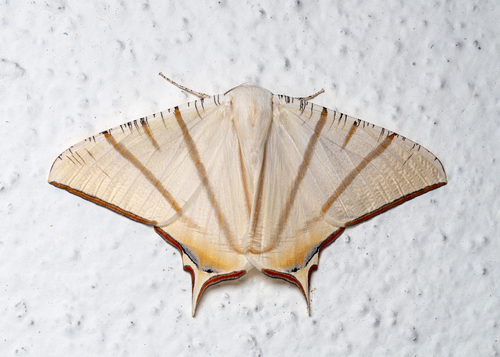
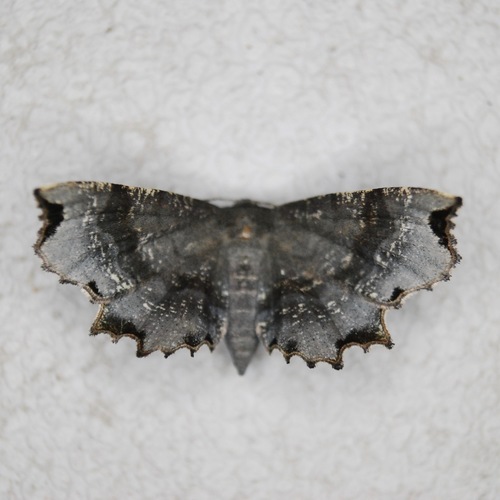
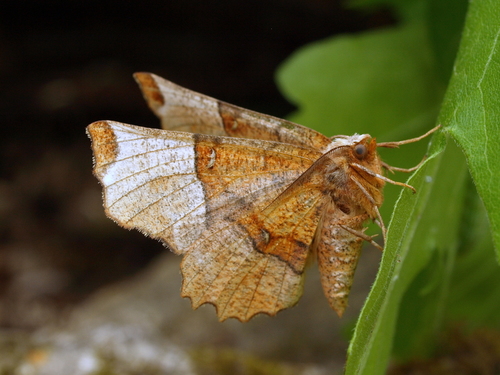
Selenia lunularia, commonly known as the lunar thorn, is a moth species belonging to the family Geometridae. It is distributed across most of Europe, excluding Iberia and Greece; it is also found in Asia Minor, Armenia, Siberia, and Issyk-Kul. This species has a wingspan of 38–44 mm, and forewings measure 16–22 mm in length. It is similar in appearance to Selenia dentaria, but can be distinguished by the following features: the antemedian lines of its forewings are strongly curved, the postmedian line is almost straight and oblique outwards, and the median area is much wider toward the posterior than the anterior, and is wholly or partially dark-shaded. The darker, more purple form is described as ab. sublunaria Steph., which matches the colour of some tetralunaria specimens. The second generation, called delunaria Hhn., is on average rather smaller and has less irroration; compared to related species, it differs less from the first brood. The ground colour of the caterpillar is most often some shade of brown, ranging from greyish or greenish to reddish, variegated with darker or paler cloud-like markings, with faint pale lines along the back. Humps and protrusions on the fifth, eighth and ninth segments make the caterpillar resemble a small branch with buds, providing excellent camouflage. The moth produces two generations per year, flying from mid-May to mid-August. The caterpillars feed on a variety of deciduous trees, including birch and oak.