About Selaginella densa var. scopulorum (Maxon) R.M.Tryon
Common Names
Selaginella densa, the species of spikemoss that this variety belongs to, has common names including lesser spikemoss, prairie spikemoss, and Rocky Mountains spikemoss.
Distribution Range
It is native to western North America, with a range extending from Alaska to Ontario, the Dakotas, Texas, and far northern California.
General Habitat
It grows in a wide variety of habitat types, from grassland to the alpine climate of high mountains, and it occurs in rocky and sandy areas.
Great Plains Habitat
It is a dominant plant in many types of prairie on the Great Plains, especially in shortgrass prairie, where it grows alongside dominant grasses.
Mountain Habitat
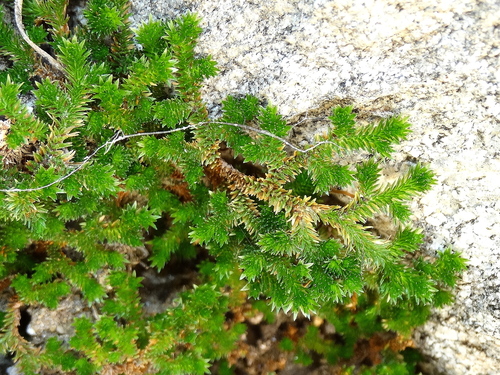
It also grows on windy, exposed, snow-free rock outcrops on mountain peaks in several ranges, including the Cascade Range and the Front Range of the Rocky Mountains.
Soil and Moisture Tolerance
It is most common on dry soils in open areas, and it tolerates desiccation relatively easily.
Stem and Branch Structure
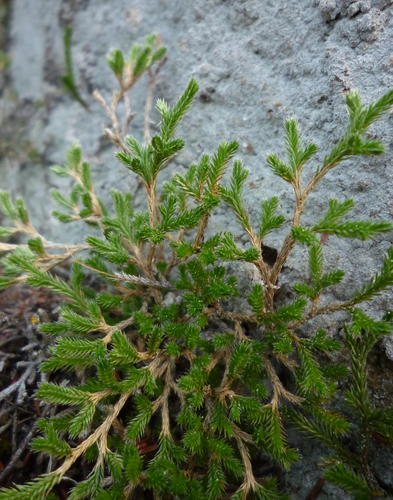
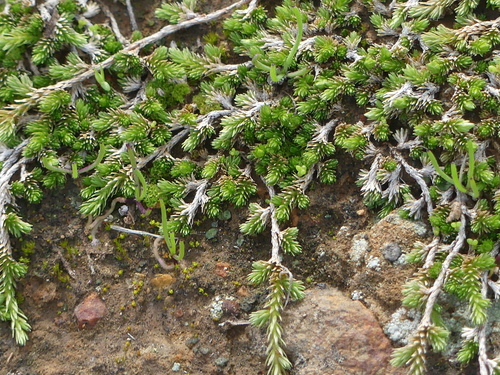
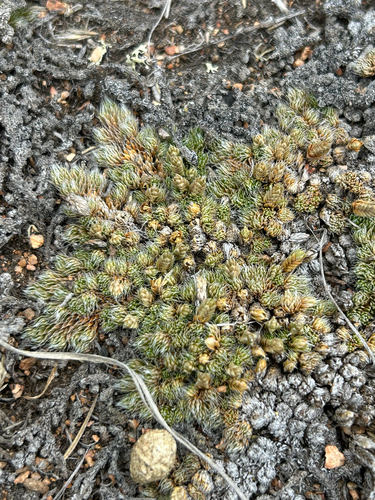
This lycophyte forms mats or cushions of creeping stems that fork into small, upright branches.
Leaf Characteristics
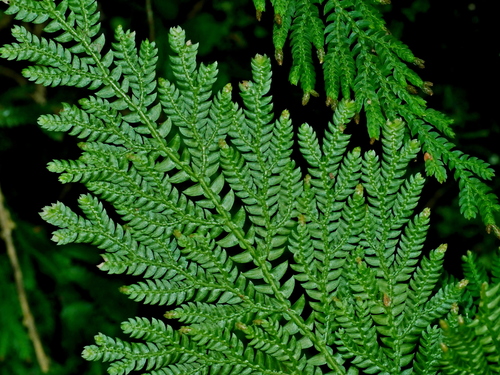
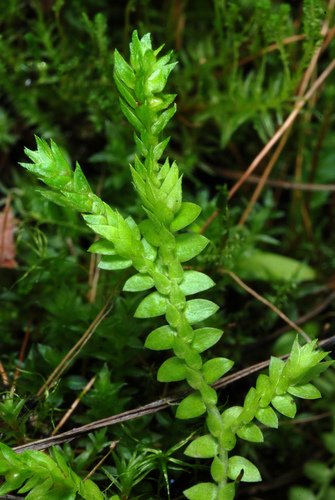
Its green, linear or lance-shaped leaves reach up to 5 millimeters long when counting the short, soft bristles on their tips, and the leaves are flattened against the stem.
Strobilus Size
Strobili growing at the ends of stems can reach up to 3 or 4 centimeters long.
Ecological Function and Uses
This compact groundcover plant protects soil from erosion, and it can be used in landscaping for this erosion-control purpose.