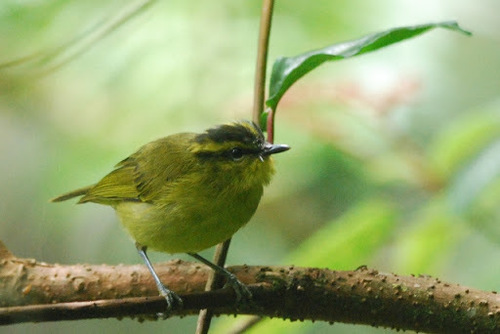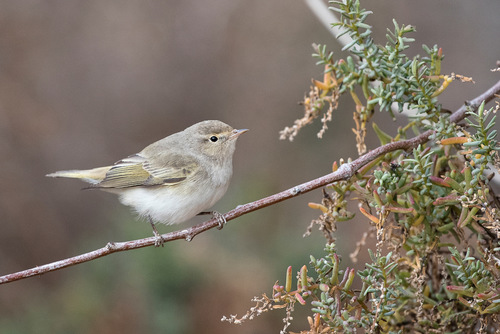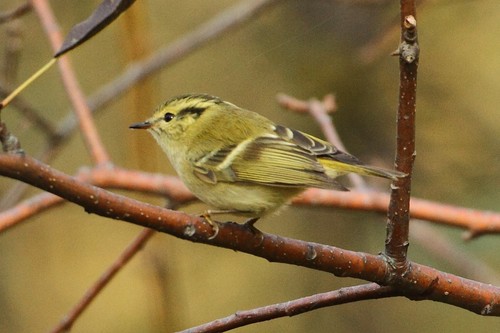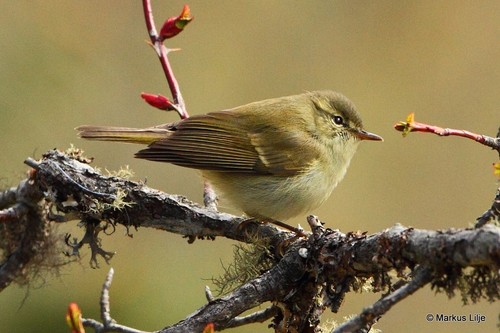
About Seicercus montis (Sharpe, 1887)
Taxonomic Classification
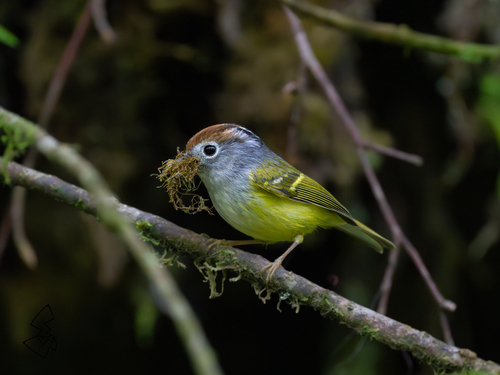
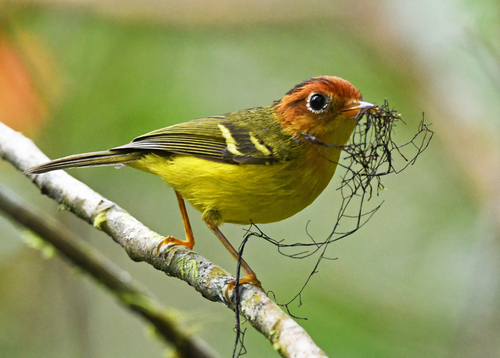
The yellow-breasted warbler (scientific name Phylloscopus montis, previously classified as Seicercus montis) is a species of Old World warbler that belongs to the family Phylloscopidae.
Geographic Distribution
This species is found in Indonesia, Malaysia, and Palawan Island in the Philippines. It is most common on Sumatra and Borneo, two islands within Indonesia.
Natural Habitat
Its natural habitats are subtropical or tropical moist lowland forest, and subtropical or tropical moist montane forest.
Breeding Timeline
The yellow-breasted warbler nests in mid-February, and breeds from February through April.
Nest Construction
It constructs domed nests with a side entrance, using grasses and bryophytes as building materials. These nests are located among roots, positioned under the overhanging lip of an eroded bank or a similar site.
Foraging Behavior
When foraging for food, this warbler forages alone or in small groups of no more than five birds.
Previous Genus Placement
The yellow-breasted warbler was previously assigned to the genus Seicercus.
Phylogenetic Study Findings
A 2018 molecular phylogenetic study found that neither the genus Phylloscopus nor the genus Seicercus were monophyletic.
Taxonomic Reorganization
Following this study's findings, taxonomic reorganization merged both genera into Phylloscopus, which holds priority under the rules of the International Commission on Zoological Nomenclature.
Population Status
The yellow-breasted warbler has a large geographic range and a steady population size.
Conservation Status
From a conservation perspective, the species is classified as Least Concern, which means it does not appear to be threatened or vulnerable to extinction at the present time.