About Sechium edule (Jacq.) Sw.
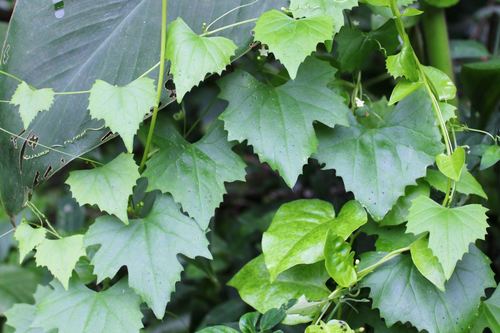
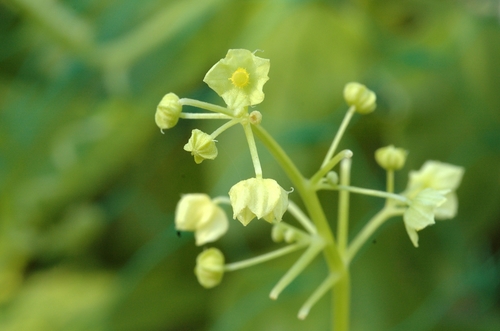
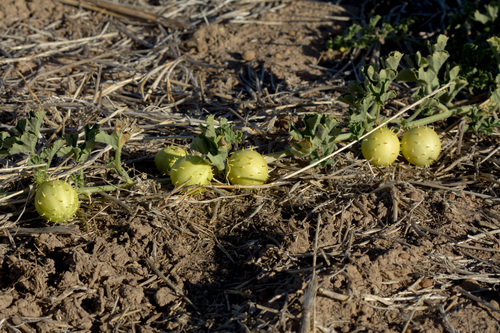
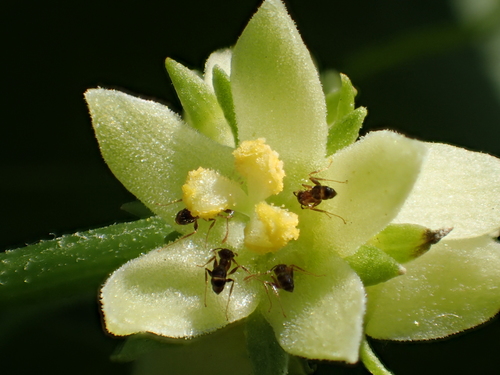
For Sechium edule (Jacq.) Sw., commonly known as chayote, the most common variety produces roughly pear-shaped, somewhat flattened fruit covered in coarse wrinkles. Fruits range from 10 to 25 cm (3.9 to 9.8 in) long, with thin green skin fused to green to white flesh, and contain a single large, flattened seed (or stone). This seed can grow up to 10 cm (3.9 in) long by 7 cm (2.8 in) wide. Some varieties have spiny fruits, and individual fruits can weigh up to 1.2 kg depending on the variety. The fruit flesh has a fairly bland taste, and its texture is described as a cross between a potato and a cucumber. Chayote is a climbing vine; it can be grown on the ground, but will climb onto any available structure, and can easily reach 12 m (39 ft) in height when given support. It produces heart-shaped leaves 10–25 cm (3.9–9.8 in) wide, and has tendrils on its stem. Male flowers grow in clusters, while female flowers grow singly. As a member of the gourd family, chayote has a sprawling growth habit and requires sufficient space to grow. Its roots are highly susceptible to rot, especially when grown in containers, and the plant is generally finicky to cultivate. However, it grows easily as a yard or garden plant in Australia and New Zealand, where it is typically grown on chicken wire supports or strung against fences. In Trinidad and Tobago, it is grown in mountainous areas, strung along wire lines. It is widely cultivated across Latin America. Yields range from 10 to 115 tonnes per hectare, depending on variety and growing region. While many people only know the fruit of chayote is edible, the root, stem, seeds, and leaves are also edible. The plant's tubers are eaten like potatoes and other root vegetables, while shoots and leaves are often used in salads and stir-fries. The fruit does not need to be peeled before it is cooked or sliced for frying, and has a very mild flavor. It is commonly served with seasonings, such as salt, butter and pepper in Australia, or included in mixed dishes alongside other vegetables and flavorings. It can also be boiled, stuffed, mashed, baked, fried, or pickled in escabeche sauce. Both the fruit and seed are rich in amino acids and vitamin C. Fresh green chayote fruit are firm, with no brown spots or signs of sprouting; smaller fruits are usually more tender. Chayote can be sliced lengthwise and eaten cold with a salad dressing dip. The edible seed is considered tasty by some when served cold, dipped in dressing. The starchy tuberous portion of the root is eaten like a yam, and can be fried. It can also be used as fodder for pigs or cattle.