About Secale cereale L.
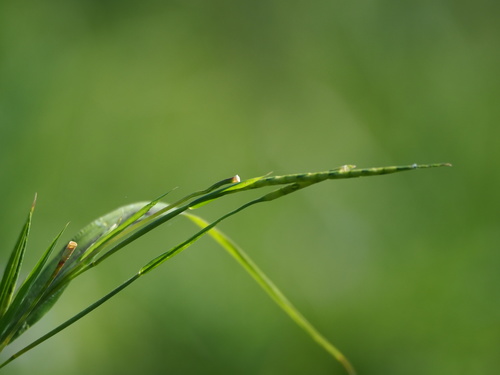
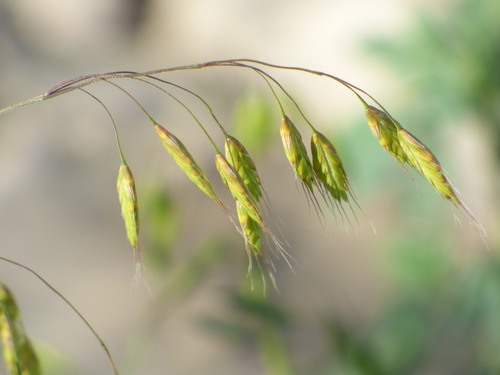
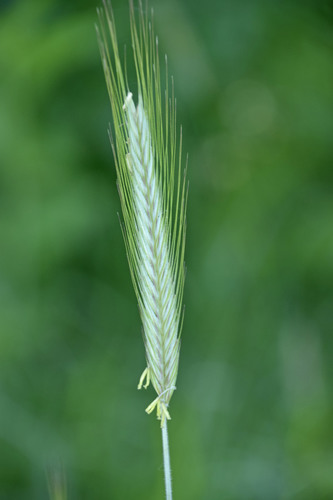
Secale cereale L., commonly known as rye, is a tall grass grown for its seeds that can be either an annual or biennial plant. Its final height ranges from 1 to 3 metres (3+1⁄2 to 10 ft), depending on variety and environmental conditions. Rye has long, pointed blue-green leaves. Its seeds are held in a curved head or spike that measures 7 to 15 centimetres (2+3⁄4 to 6 in) long. This head is made up of many spikelets, each containing two small flowers, that alternate left and right along the length of the head. People have widely cultivated rye in Central and Eastern Europe since the Middle Ages. It is the main bread cereal in most areas located east of the France–Germany border and north of Hungary. In Southern Europe, rye was grown on marginal lands. Rye grows successfully in much poorer soils than most other cereal grains require, making it a particularly valuable crop for regions with sandy or peaty soil. Rye also tolerates cold better than other small grains, and can survive snow cover that would kill winter wheat. Winter rye is the most commonly grown type: it is planted and begins growing in autumn, and develops rapidly in spring. This rapid spring growth lets it provide spring grazing at a time when spring-planted wheat has only just germinated. The physical properties of rye seeds impact the qualities of the final food product, including seed size, surface area, and porosity. A rye seed’s surface area directly correlates with its drying and heat transfer time: smaller seeds have increased heat transfer, which results in a shorter drying time. Seeds with lower porosity lose water more slowly during drying. Rye is harvested the same way as wheat, using a combine harvester that cuts the plants, threshes and winnows the grain, and releases straw back onto the field. The straw is later pressed into bales or left as a soil amendment. The harvested grain is stored in local silos, or transported to regional grain elevators where it is combined with other lots for storage and long-distance shipment. Before mechanized agriculture, rye was harvested manually with scythes or sickles. Rye is a useful forage crop in cool climates: it grows vigorously and produces abundant fodder for grazing animals, or can be used as green manure to improve soil quality. Its rapid growth and deep roots also make it an excellent winter cover crop. Rye straw is used as livestock bedding, despite the associated risk of ergot poisoning. It is also used on a small scale to make crafts such as corn dollies. More recently, rye has been used as a raw material for bioconversion into products like the sweetener xylitol. Rye flour, boiled together with red iron oxide pigments and other additives, is used to make traditional Falun red paint, a widely used house paint in Sweden and other Scandinavian countries.