About Scotopteryx chenopodiata (Linnaeus, 1758)
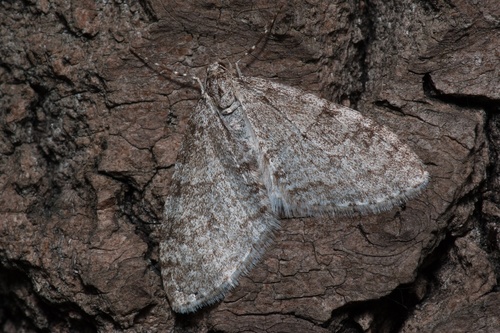
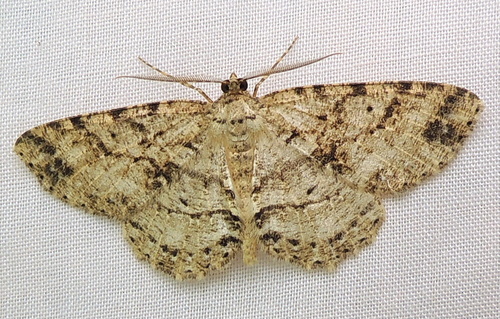
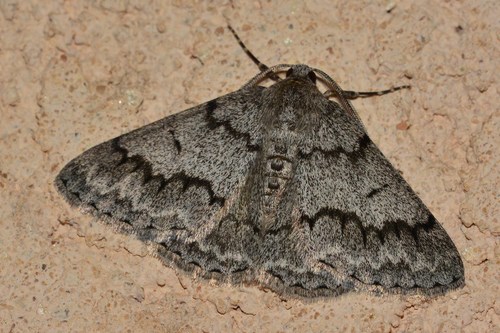
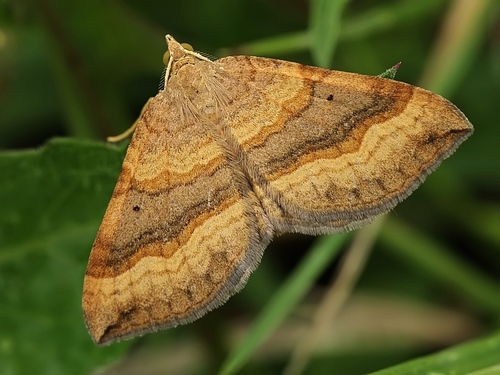
This species is Scotopteryx chenopodiata, first described by Linnaeus in 1758. Adults have a wingspan of 25 to 30 millimeters, with forewings measuring 16 to 19 millimeters in length. Their body and wing colouration is highly variable, ranging from yellow brown, light brown, red brown, and grey brown to plain grey. Forewings feature several mostly parallel, wavy crosslines, plus a prominent broad dark brown band in the median area. This band has two distinct shades: it is greyer in the middle, and more rust-coloured along the edges. Females are usually a brighter yellowish shade than males, and both sexes show variation in overall tint. Forewings also have a small apical streak. Hindwings are pale, with faint crosslines. The caterpillar ranges from yellowish grey to slate grey, with a dark, interrupted dorsal line and light, continuous stripes along the sides. The pupa is reddish brown with a glossy surface marked by small dots. It has a wide cremaster, with two long hook-shaped thorns and two fine lateral bristles curled upward at the tip. This species occurs across most of the Palearctic region. It extends from Europe through Central Asia to Siberia, the Russian Far East (including Sakhalin), Amur, the Altai Mountains, and Ussuri. Within Europe, its range reaches from the Iberian Peninsula north to northern Fennoscandia, and south to the Italian Peninsula and the Balkan Peninsula.