About Scopula ternata Schrank, 1802
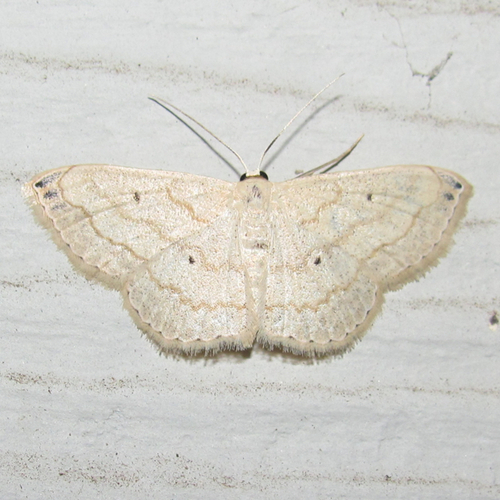
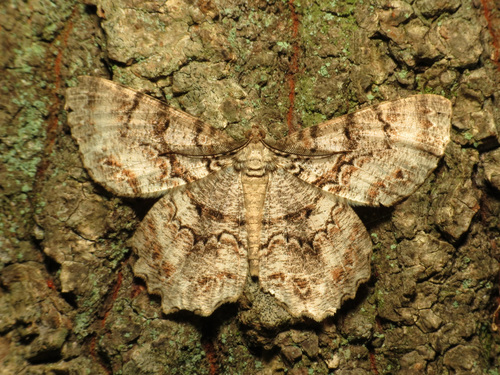
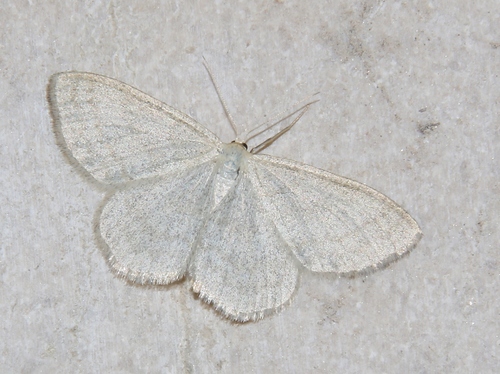
Scopula ternata, commonly known as the smoky wave, is a moth species belonging to the family Geometridae. It was described by Franz von Paula Schrank in 1802. This species is mainly distributed across northern and parts of central Europe, with isolated populations in southern and south-eastern Europe. Its western range reaches eastern France, eastern Belgium, Scotland, and an isolated population in the Pyrenees. To the north, its range extends into the polar regions, and to the south it occurs as far as the Alps. Eastward, its range stretches through central and northern Russia to the Ural Mountains, and across Siberia to the Yenisei River. Males of this species have a wingspan of 24–29 millimetres (0.94–1.14 in), while females have a smaller wingspan of 21–25 millimetres (0.83–0.98 in). The base wing colour of adults ranges from pale brown to pale yellowish, with grey dusting; males are typically more intensely dusted than females. The cross-lines on the wings show low contrast. The inner transverse line is often almost completely gone, while the middle band and outer transverse line are usually present, with the outer transverse line generally being the most strongly developed. The wavy line is only rarely pronounced, and the marginal line may be faintly indicated by interrupted stripes in females. Discal spots are absent on both the forewings and hindwings. The egg of this species is approximately cylindrical with flattened ends. Its outer surface has 17 to 18 longitudinal ribs that intersect with finer cross ribs. Newly laid eggs are light yellow, and they turn reddish as they develop. The caterpillar is relatively long and slender, with a lateral skin fold. It is reddish-grey, marked with a double, dark, interrupted dorsal line that is slightly wider at segment incisions. It also has a distinct, wide sideline that is very noticeable. Adult moths fly from May to July in warmer regions, and from June to August in Northern Europe. Larvae feed most preferentially on Vaccinium myrtillus, Vaccinium uliginosum, Calluna vulgaris, Lathyrus niger, Salix repens and Erica. They have also been recorded less frequently feeding on Lonicera tatarica, Stellaria, Polygonum aviculare, Fragaria vesca, Lactuca sativa and Taraxacum officinale.