About Scopula rubiginata (Hufnagel, 1767)
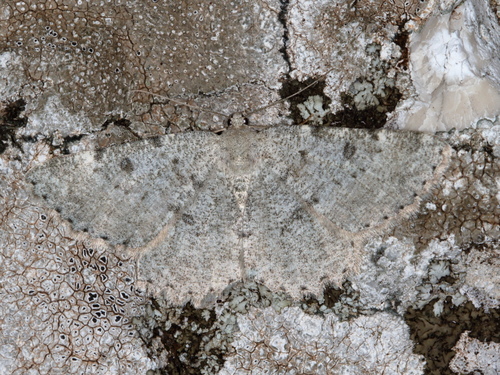
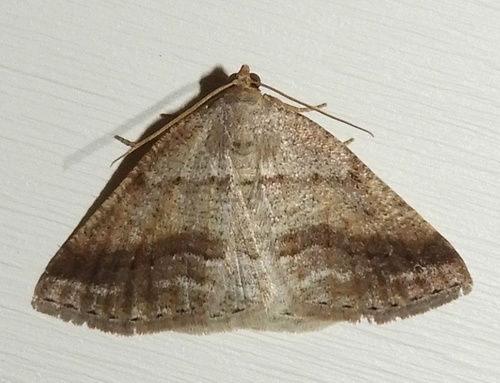
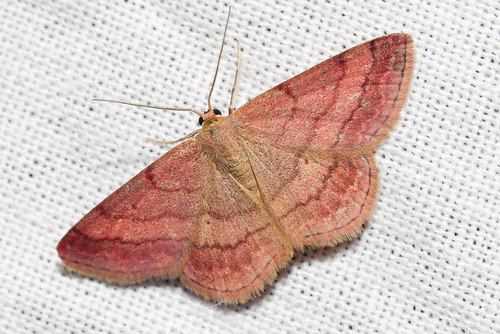
Scopula rubiginata (Hufnagel, 1767) has a wingspan of 16–22 mm. Compared to other geometrids, these moths are rather small. They show quite high variability in their base color and wing markings. The base color of their wings depends on humidity, and may be tawny, pale brown, violet-reddish, greyish or straw-coloured. The upper sides of the wings feature darker brown or darker reddish, transverse, slightly wavy markings, which give the species its common name. The inner transverse line is absent on the hindwings. Similar markings appear on the undersides of the wings. The apex of the forewings is rounded, and the hindwing margin is uniform and almost round. Fringes are paler than the base wing color. The eggs of this species are approximately cylindrical, with a surface covered in 16 distinct longitudinal ribs. Caterpillars are relatively slender, and thicken slightly toward the rear end. Their color is variable, ranging from yellowish and brownish to slightly reddish or gray. The ventral side is greenish, and the back bears a relatively thin line that is darker than the base body color. The head is relatively small, roundish, and slightly reddish. The pupa is brown and covered in fine bristles. This species is very similar to Idaea ochrata, but I. ochrata has a dented hindwing margin, while S. rubiginata does not. This species occurs from the Iberian Peninsula east to the Ural. To the north, its range extends to Denmark, southern Sweden, and southern Finland. It is absent from most of southern Iberian Peninsula, with the exception of Gibraltar, as well as from Sicily and the southern Greek islands. In Morocco, it is found in the Atlas Mountains. It is also present in northern Turkey, the Caucasus, and the Crimea. Eastward, its range extends through southern Siberia and the northern mountains of central Asia all the way to Mongolia. These moths prefer to inhabit sandy terrain, including sand dunes, dry-warm environments, grasslands, and heath, at elevations up to 1,000 metres (3,300 ft) above sea level.