About Scopolia carniolica Jacq.
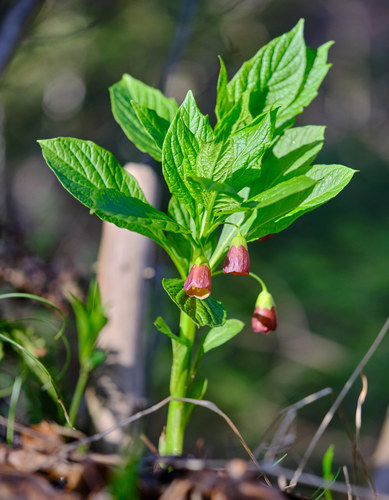
Scopolia carniolica Jacq., commonly called European scopolia or henbane bell, is a poisonous plant in the tribe Hyoscyameae of the nightshade family Solanaceae. This species reaches 60 centimetres (24 inches) in height. It produces dark brownish-violet nodding flowers that grow on long, slender pedicels. Its toxicity comes from high levels of tropane alkaloids, especially atropine; atropine concentration is highest in the roots. Scopolia carniolica is native to the region extending from the eastern Alps to the eastern Carpathians, where it grows on wet soils in beech forests from lowlands up to mountain zones, and it is also naturalized further east in southwestern Russia. It is officially native to Austria, the Baltic States, Czechoslovakia, Hungary, Italy, North Caucasus, Poland, Romania, Transcaucasus, Ukraine, and Yugoslavia. A rare form, Scopolia carniolica f. hladnikiana, differs from the common form by having a greenish yellow corolla both inside and out, and this form is native to Slovenia. The species was first described by botanist Carl Linnaeus, who named it Hyoscyamus scopolia in honor of physician Giovanni Antonio Scopoli. Nikolaus Joseph von Jacquin later reclassified it into the genus Scopolia. Its specific epithet carniolica means 'of Carniola', a historical region that covers parts of modern-day Slovenia. Scopolia carniolica is the symbol of the Slovene Society of Anaesthesiology and Intensive Care Medicine. It is a source of scopolamine, which was used as an anesthetic in the past. In the late Middle Ages, the plant was used as a narcotic and added to so-called 'love potions', a practice that often caused fatal poisoning. In its native Carpathians, Scopolia carniolica was also used with criminal intent: people used it to stupefy victims for robbery or to kill victims directly. It has also been used as a medicinal plant across Europe.