About Scleroderma citrinum Pers.
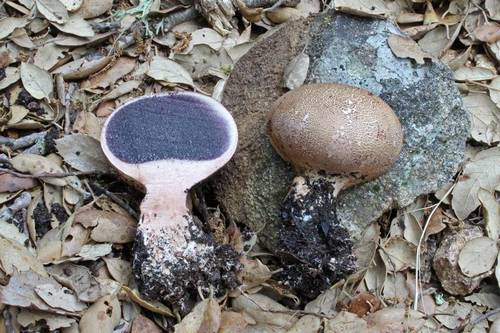
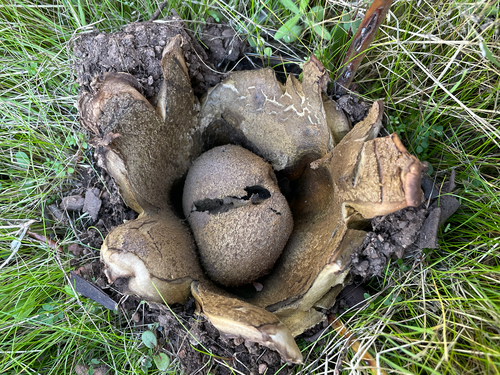
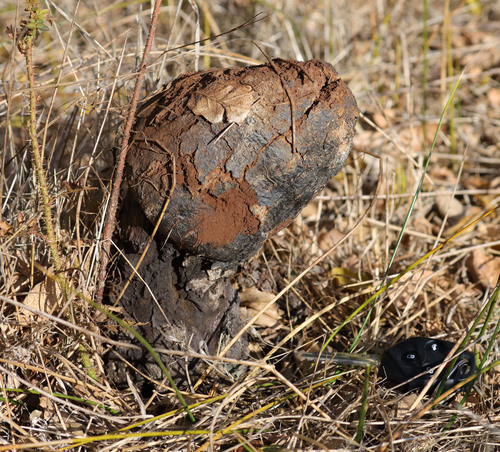
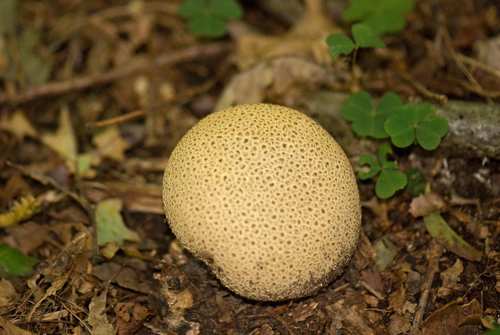
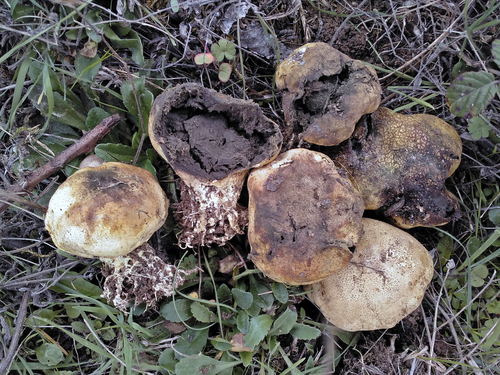
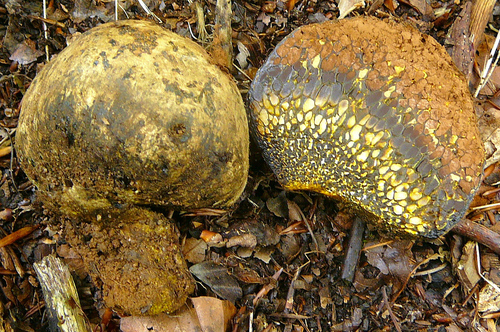
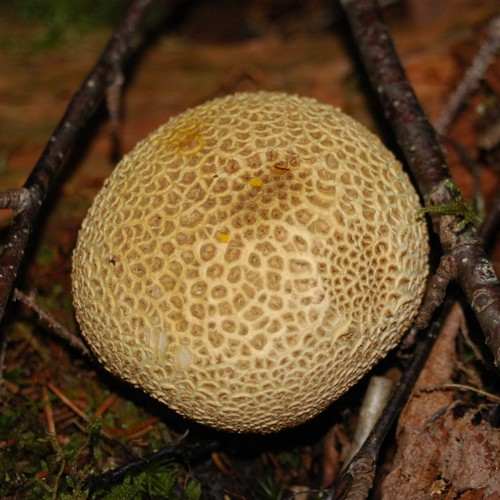
The fruit bodies of Scleroderma citrinum Pers. grow up to 10 centimetres (4 in) wide and 6 cm high, and have a yellowish outer skin called the peridium. Earthballs are superficially similar and often mistaken for edible puffballs, especially the pear-shaped puffball Apioperdon pyriforme. Unlike puffballs, which have a single opening on the top to release spores, earthballs break apart to release their spores. Additionally, S. citrinum has much firmer flesh, and its dark interior gleba develops much earlier than the gleba of puffballs. Scleroderma citrinum has no stem, and is attached to the soil through mycelial cords. Its thick, firm peridium is typically ochre yellow on the outside, and covered in irregular warts. Scleroderma citrinum is found in Europe and North America, and is the most common earthball fungus species in the United Kingdom. It grows widely in woods, heathland, and short grass from autumn to winter. This species has two synonyms: S. aurantium (Vaill.) and Scleroderma vulgare Horn. Scleroderma citrinum is an ectomycorrhizal fungus that forms a symbiotic relationship with tree species, and it can influence the diversity of soil bacterial communities under some tree species. The earthball can be parasitized by the fungus Pseudoboletus parasiticus. Scleroderma citrinum is poisonous, and inexperienced mushroom hunters often mistake it for truffles. Ingesting S. citrinum causes gastrointestinal distress in humans and animals. Some people may develop lacrimation, rhinitis, rhinorrhea, and conjunctivitis after exposure to its spores. Four pigments have been found in the fruiting body of S. citrinum Pers.: sclerocitrin, norbadione A, xerocomic acid, and badione A.