About Sclerocarya birrea (A.Rich.) Hochst.
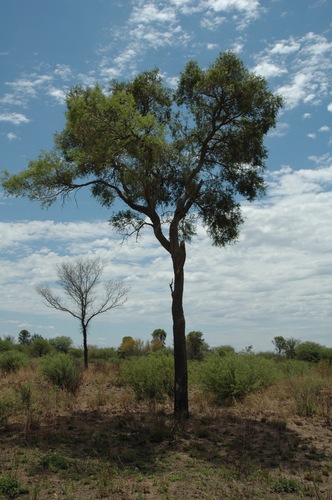
Sclerocarya birrea, commonly known as the marula tree, is a single-stemmed tree species with a broad, spreading crown. It is identifiable by its grey mottled bark, and can reach up to 18 meters in height. It grows primarily at low altitudes in open woodlands. The distribution of this species across Africa and Madagascar has tracked Bantu migrations, and there is some evidence of human domestication of marula trees, as trees growing on farmland generally produce larger fruit than wild trees.
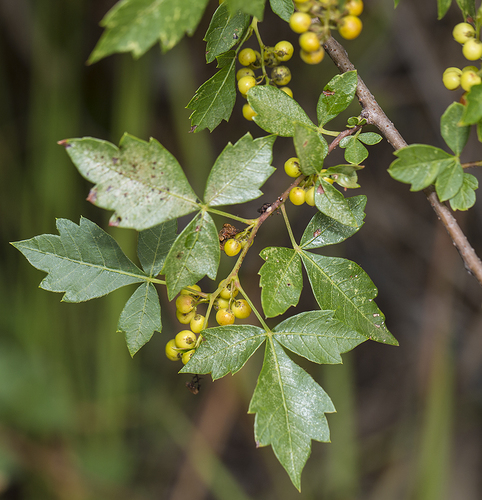
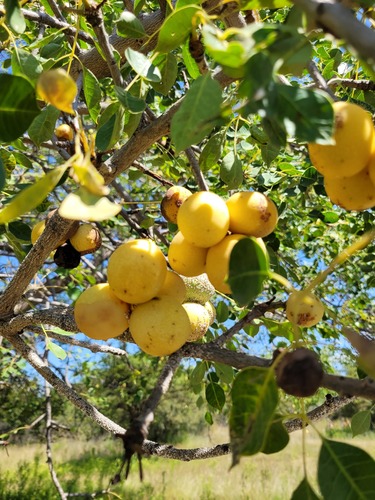
Marula fruits are oblong or ovate, typically 3 to 4 centimeters long, rarely reaching 5 centimeters. Fruits ripen between February and March, and sometimes as late as April. They have a light yellow outer skin (exocarp) and white inner flesh (mesocarp). Unripe green fruits fall to the ground first, then ripen to yellow off the tree. Ripe marula fruits are succulent and tart, with a strong, distinctive flavour. Inside the fruit is a hard, thick-walled stone that usually holds 2 or 3 seeds, though it can contain up to 4, with one seed per internal compartment. The seed kernel is edible, and each seed is sealed with a hard plug called an operculum. For commercial propagation, seeds may be soaked or treated to loosen these plugs and improve germination rates.
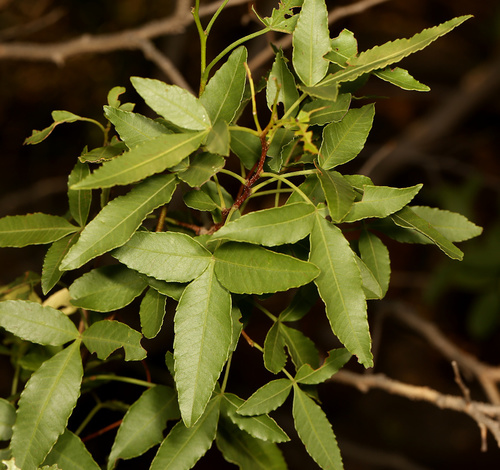
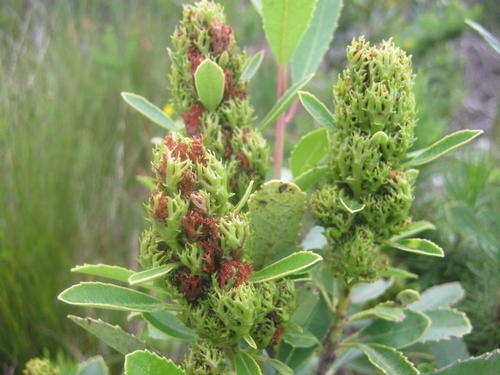
Marula trees are dioecious, meaning most female trees produce fruit while male trees do not, though hermaphroditic fruit-producing individuals have been reported. Male trees grow clusters of male flowers on a terminal raceme. Each male flower has red sepals and petals, and approximately 20 stamens. Rarely, a male flower may develop a gynoecium and become bisexual. Female flowers grow singly on their own pedicels and have staminodes instead of functional stamens. Marula leaves are alternate, compound, and imparipinnately divided, with leaflets ranging in shape from round to elliptical.
The marula fruit has a long history of traditional use as food across Africa, and holds considerable socioeconomic importance for local communities. Fruit juice and pulp are mixed with water and fermented for 1 to 3 days to make marula beer, a traditional alcoholic beverage. The edible kernel inside the hard nut shell is difficult to extract, but has a pleasant flavour; it is commonly eaten by children, and serves as a winter staple food for some hunter-gatherer tribes. In Namibia, the Ovambo people call marula-derived liqueur or wine omagongo or omaongo, a product generally distinct from the weaker traditional marula beer. The Ovambo also harvest marula juice (called oshinwa in Kuanyama) and cooking oil (called odjove) from the fruit. Marula oil is used topically as a skin moisturizer, and is also consumed as an edible oil in the diet of the San people of Southern Africa. The marula tree is a protected species in South Africa. Well-known commercial marula products from South Africa include the Amarula cream liqueur made from the fruit, and the distilled moonshine known as mampoer, which is referenced in the writings of South African author Herman Charles Bosman.
On an industrial scale, marula fruit is collected from wild stands by members of rural communities who live on land where the trees grow. Harvesting and selling fruit only takes place over a 2 to 3 month window each year, but it is an important source of income for low-income rural people, especially women. Collected fruit is sent to processing facilities, where pulp, seeds, kernels, and kernel oil are extracted and stored for year-round processing.
A variety of wild animals in Southern Africa eat marula fruit. Giraffes, rhinoceroses, and elephants all browse on marula trees, and elephants are particularly major consumers. Elephants eat the bark, branches, and fruit of marula trees, which can limit the spread of the species. Damage from elephant browsing is a useful identifying feature of marula trees, as elephants preferentially target this species. Elephants also disperse marula seeds through their dung. The 1974 documentary *Animals Are Beautiful People* by Jamie Uys included scenes showing elephants, ostriches, warthogs, and baboons reportedly becoming intoxicated from eating fermented marula fruit, a claim that has also appeared in popular press. While elephants do commonly eat marula fruit, they would need to consume an enormous quantity of fermented fruit to experience any intoxicating effect, and most other animals prefer to eat ripe, non-fermented fruit.
Marula fruit has been proposed as the preferred historical food source for the ancestral forest-dwelling form of the fruit fly *Drosophila melanogaster*. Ancestral fruit flies were much more selective about the fruit they chose to eat than the self-domesticated fruit fly populations that live alongside humans, and ancestral flies are specifically attracted to the compound ethyl isovalerate found in marula fruit.