About Sclerocactus wrightiae L.D.Benson
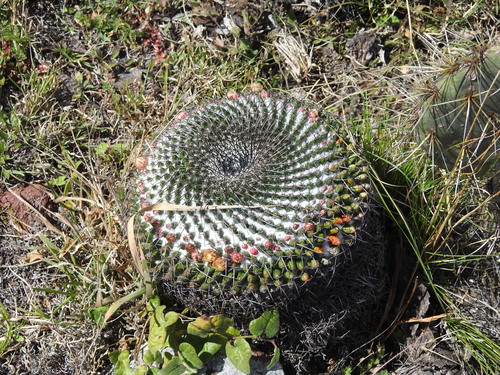
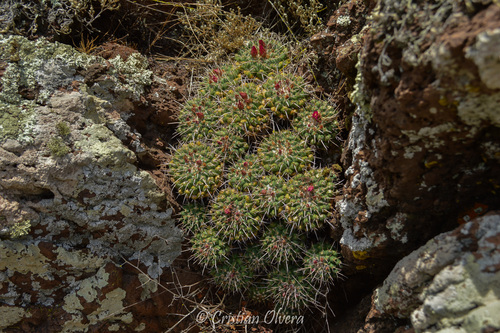
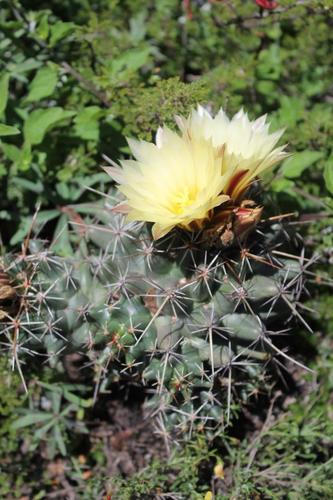
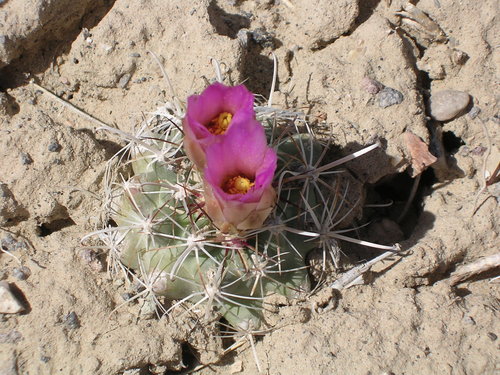
Sclerocactus wrightiae stems grow 4 to 12 centimeters tall, with shapes ranging from depressed-hemispheric to obovoid to short-cylindric, and do not develop into tall-cylindric shapes. Its flowers are 2 to 3.5 centimeters long, and can be yellowish, white, or pink, with red-violet filaments. Before anthesis, its flower buds are reddish-brown and rounded. Just before flowering, the buds elongate and become pointed, which matches the growth pattern of other smaller Sclerocactus species. This cactus is endemic to Utah in the United States, and is only found in Emery, Sevier, Wayne, and Garfield Counties, occurring at Capitol Reef National Park and the San Rafael Swell. It faces numerous threats and has been federally listed as an endangered species in the United States under the Endangered Species Act since October 11, 1979. This plant grows in shrublands on a specific soil type. The soil is usually fine or sandy in texture, and the land surface has a large amount of scattered material including pebbles, gravel, and fossil oyster shells. An important component of its growing substrate is the cryptobiotic crust that covers the soil surface. The cactus does not grow in areas where this cryptobiotic crust has been destroyed.