About Sciurus lis Temminck, 1844
Taxonomic Identity
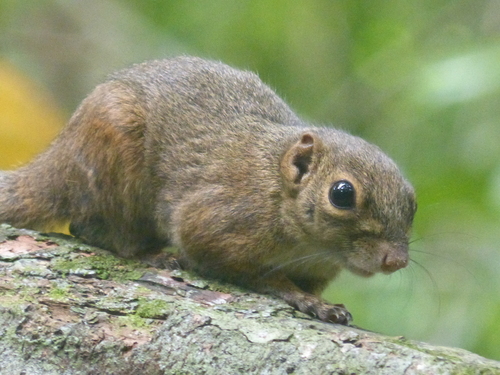
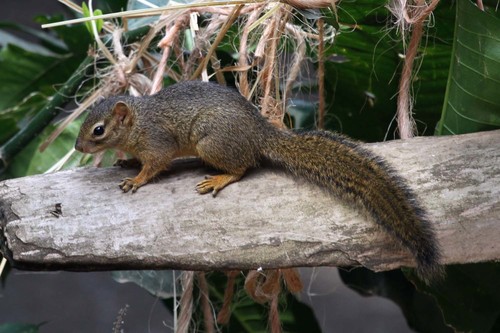
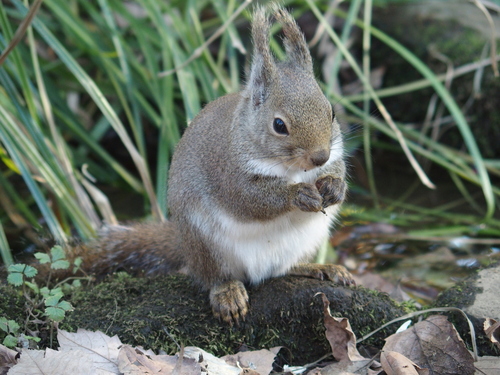
The Japanese squirrel (Sciurus lis) is a tree squirrel from the genus Sciurus that is endemic to Japan.
Formal Description
It was formally described by Dutch zoologist Coenraad Jacob Temminck in 1844.
Native Range
Its native range covers large areas of the Japanese islands of Honshū, Shikoku, and Kyūshū.
Replacement on Hokkaido
The species is not found on Hokkaido, where the closely related Eurasian red squirrel (Sciurus vulgaris) replaces it; the red squirrel is in turn not found anywhere in the Japanese archipelago outside of Hokkaido.
Population Decline
In recent times, populations of Japanese squirrels have declined in south-western Honshū and Shikoku, and the species has been completely lost from Kyūshū.
Extinction Driver
Human-caused forest fragmentation appears to be one factor contributing to these recent local extinctions of the species.
Walnut Diet Proportion
In some regions, walnuts can make up as much as 35% of the Japanese squirrel’s diet.
Seed Dispersal Evolution Impact
This squirrel-driven seed dispersal may have influenced the evolution of larger seed sizes in Japanese walnut populations where Japanese squirrels live.
Walnut as Food Source
Additionally, Japanese walnut (Juglans ailanthifolia) is an important food source for Japanese squirrels living in lowland mixed-species forests of Japan.
Walnut Feeding Technique
Japanese squirrels have a specific feeding technique for opening walnut shells: they chew along the shell’s natural crease, embed their teeth into the cleft, and pry the two shell halves apart.
Feeding Technique Efficiency
This method appears to be efficient, as it minimizes the total time needed to consume an entire walnut.
Dead Tree Ecological Roles
Research has also found that fallen dead trees act as landmarks for Japanese squirrels during movement, and are used for vigilance and resting.
Deadwood Hoarding Function
Deadwood can also work as a food hoarding site for Japanese squirrels, a function that is critical to their survival.
Deadwood Habitat Benefit
Increasing the amount of deadwood in a habitat can benefit small mammals like the Japanese squirrel, and significantly improves overall habitat quality.