About Scilla bifolia L.
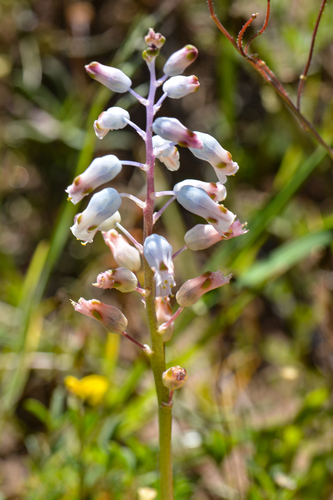
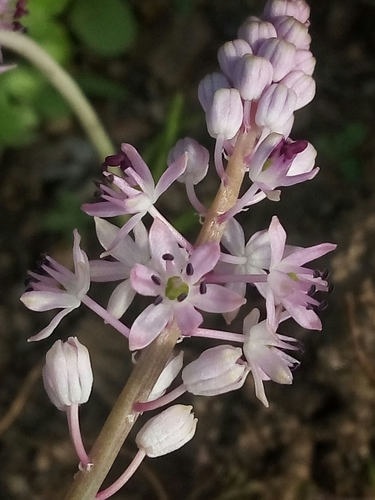
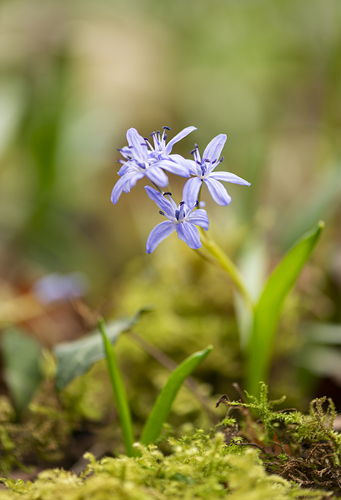
Scilla bifolia L. grows from a bulb that is 1 to 2 centimeters (0.4 to 0.8 inches) across. It produces two, or rarely three, lance-shaped, curved, fleshy, shiny leaves. The leaf bases clasp around the lower half of the stem, which is called an amplexicaul arrangement. Its flowering stems are erect, unbranched, and grow 10 to 20 centimeters (4 to 8 inches) tall. A raceme holds 6 to 10 individual flowers, each 1 centimeter (0.4 inches) across. Unlike the nodding flowers of Scilla siberica (Siberian squill), the flowers of Scilla bifolia face upward. This species blooms from early to late spring. Its six tepals are most commonly deep violet-blue, and more rarely white, pink, or purple. The fruit it produces is a capsule 6 to 8 millimeters (0.2 to 0.3 inches) across. Scilla bifolia has been awarded the Royal Horticultural Society's Award of Garden Merit. Scilla bifolia is native to Europe and western Russia, ranging south through Turkey to Syria. It grows in shady locations, beech or other deciduous woodlands, and mountain grasslands. It can be found growing at altitudes between 100 and 2,000 meters (330 to 6,560 feet) above sea level.