About Schwalbea americana L.
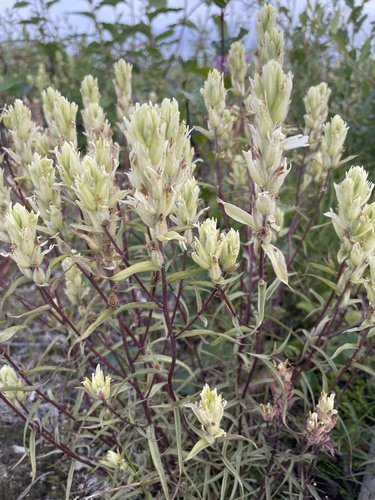
This herbaceous species, Schwalbea americana L., grows to a height of 1.0 to 2.6 feet (0.3 to 0.8 meters). It produces flowers from April to June, which are pollinated by bees, and its fruits mature between July and September. Fruit dispersal for this species is not well understood, but fruits are most likely wind-dispersed and stay close to the parent plant. The fruit itself is a brown, dry, dehiscent, narrowly oval-shaped capsule, measuring around 0.4 inches (1 cm) long. Schwalbea americana L. produces numerous, flat, winged seeds. American chaffseed (the common name of Schwalbea americana L.) usually grows in sandy, acidic soils that range from seasonally moist to seasonally dry. It is most often found in open habitats including moist pine flatwoods, pine/wiregrass savannas, and ecotonal zones between peaty wetlands and dry sandy soils. All these habitats were historically maintained by wildfires started by either human activity or lightning strikes, and these pine savanna habitats are notably species-rich. Schwalbea americana L. is a root hemiparasite, meaning it is partially dependent on host plants, but it is not host-specific and can parasitize a wide range of trees, shrubs, and herbs. Fire appears to be required for the species' long-term viability, and it strongly impacts reproductive success by creating the conditions needed for successful seed germination. Fire may also be necessary for young plants to form their haustorial connection to hosts. The short period of a few months right after a fire provides enough time for the species' tiny seeds to germinate in bare mineral soil, under full sun, and without leaf litter or competing vegetation present. The thick, coarse chaffseed capsule insulates the seeds from the high temperatures of fire, and heat exposure from fire may actually increase the species' seed germination rates.