About Schoenoplectus americanus (Pers.) Volkart
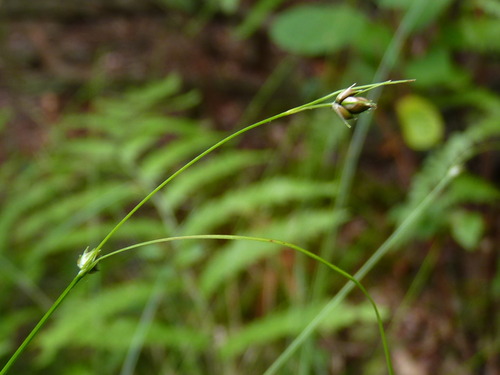
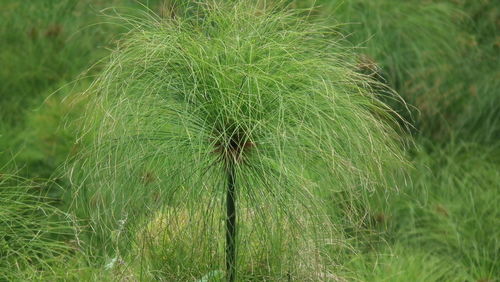
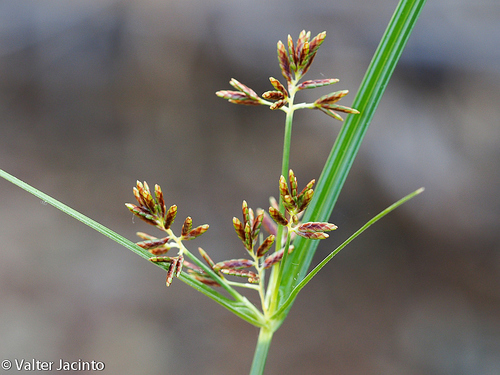
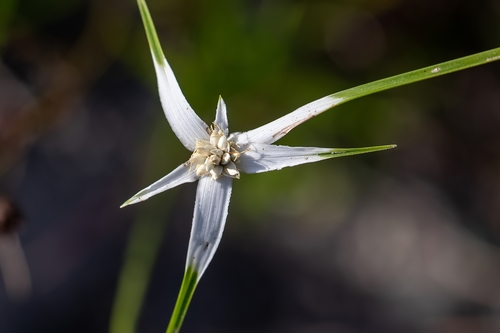
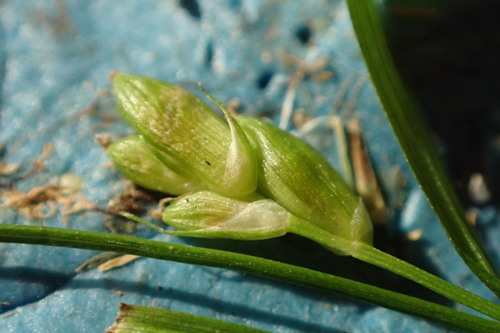
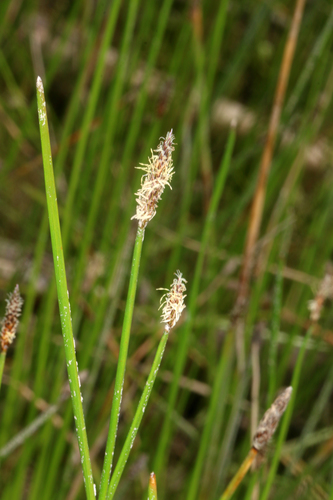
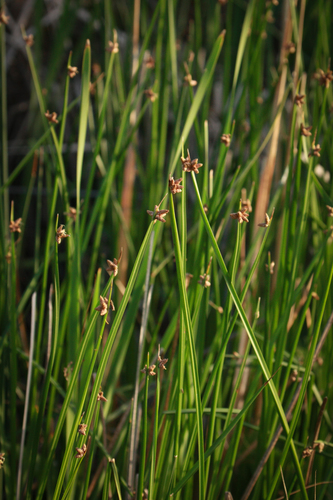
This perennial herb, Schoenoplectus americanus, regularly grows taller than 2 meters (over 6 and a half feet). Its stiff stems are distinctly three-angled, and the sides between the stem edges are usually deeply concave. Each individual plant produces three or fewer short, narrow leaves. The inflorescence forms a small compact head containing several spikelets, which can range in color from brown to bright orange, red, purplish, or pale and translucent. The edges of these spikelets are covered in fine hairs. The fruit produced by this plant is a brown achene. Schoenoplectus americanus reproduces sexually via seed, and existing colonies expand through vegetative reproduction, sprouting new growth from rhizomes.
Schoenoplectus americanus is native to the Americas. Its native range extends from Alaska to Nova Scotia in North America, and reaches all the way south into southern South America. It is most abundant along the East and Gulf Coasts of the United States, and also common in parts of the western United States. It can grow in a wide variety of coastal and inland wetland habitats, and also occurs in sagebrush, desert scrub, chaparral, and plains ecosystems.
Muskrat, nutria, and other animals feed on this plant, especially its rhizomes. It is strongly preferred as a food source by snow geese on their wintering grounds. Native American groups have used Schoenoplectus americanus for a range of purposes, including as food, for basketry, and for making hats. Within its native range, it is used for revegetation projects in salt marsh habitats. It also serves as a model organism for research on salt marsh ecology and how these ecosystems respond to climate change, specifically current global warming.