About Schoenoplectiella juncoides (Roxb.) Lye
Schoenoplectiella juncoides (common names Kaluha and rock bulrush) is a species of sedge in the Cyperaceae family. This species was first described by William Roxburgh in 1814 as Scirpus junceoides. In 1888, Eduard Palla transferred it to the genus Schoenoplectus, where it was known as Schoenoplectus juncoides for many years. In 2003, Kåre Arnstein Lye transferred it to the new genus Schoenoplectiella, creating its current accepted name, Schoenoplectiella juncoides (Roxb.) Lye.
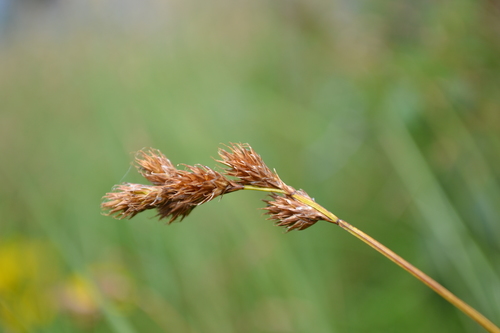
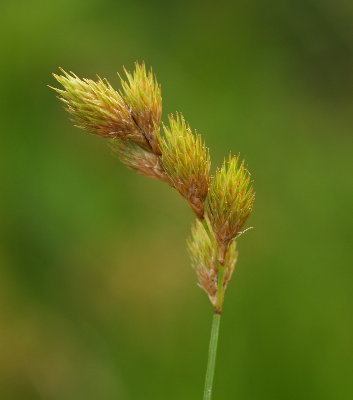
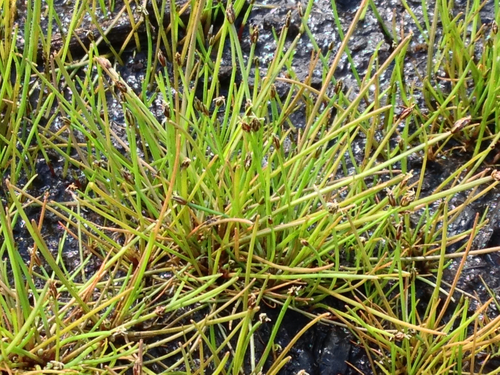
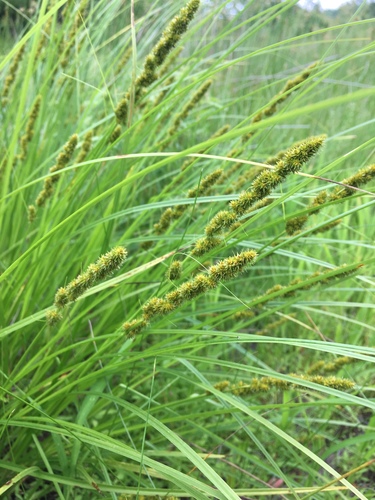
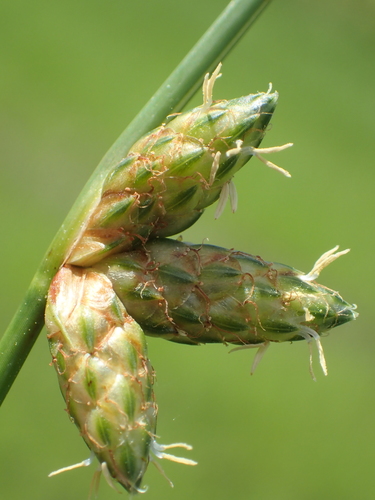
It has been recorded across Asia, Africa, North America, Madagascar, Hawaiʻi, east Asia, and Oceania. In Hawaiʻi, it is indigenous, originally found only on Kaua'i and has never colonized the other Hawaiian islands. It most commonly grows at high elevations between 180 and 1,300 m (590 and 4,270 ft), and thrives in wet or moist conditions, usually found near ponds, rivers, swamps, and wetlands. It is an annual plant that grows in clumps, reaching up to 60 centimeters tall, with long, narrow, tall leaves. Unlike typical flowering plants, it does not produce large, bright, scented flowers. Instead, its flowers are small, spiky spikes that grow in clumps, and are brown or greenish in color. It produces a dry, indehiscent fruiting body called an achene; when achenes fall from the leaves, they are carried to new locations to support the species' spread.
In natural wetland environments, this species provides ecological benefits. Its root system anchors soil in place to prevent erosion, which in turn improves water quality: it slows the speed of runoff water, allowing pollutants to be filtered before they enter main water bodies. It also provides habitat, shelter, and food for many species of birds, insects, and other invertebrates.
However, S. juncoides is classified as a serious invasive weed of rice paddies. When it grows in rice fields, it can reduce crop yields. Farmers control this invasive species two main ways: they can use chemical pesticides, or they can reduce the species' vegetative sprouts through wet puddling, a practice that involves flooding the field. While wet puddling can have negative effects on soil, it successfully prevents this species from becoming invasive in rice crops.
Humans use S. juncoides for a number of purposes. Its seeds can be eaten, and are used to make bread or porridge as a food source in some countries. It is also used for wildlife restoration projects, because of its ability to prevent erosion, improve water quality, and provide habitat for native wildlife. In some cultures, its leaves are harvested for craft work, including weaving baskets, hats, and art.