About Schistocerca cancellata (Serville, 1838)
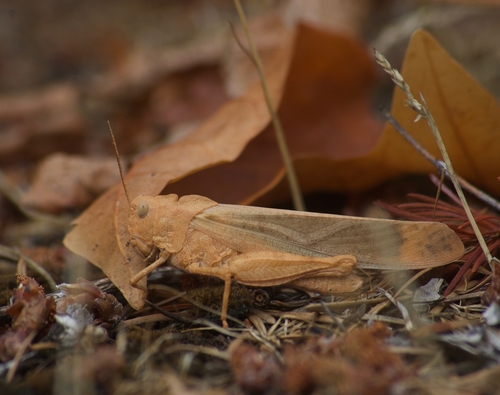
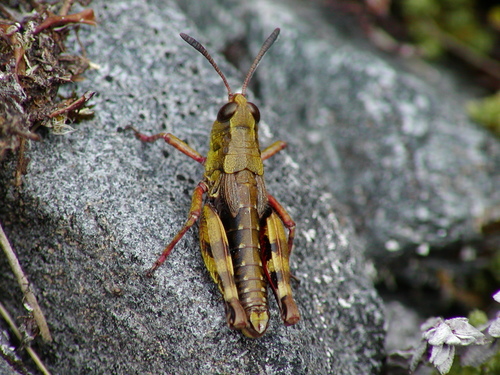
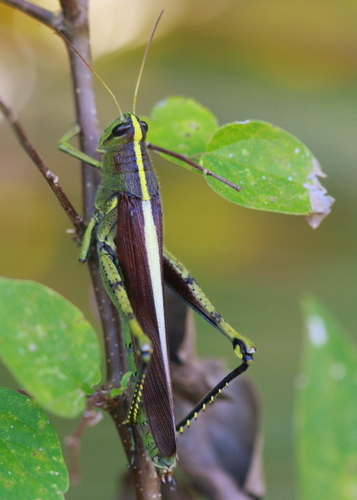
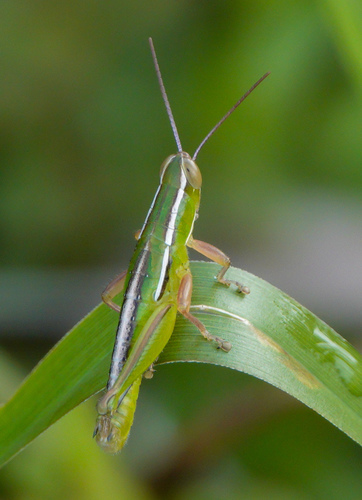
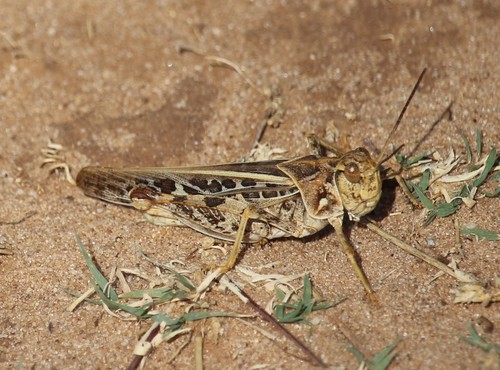
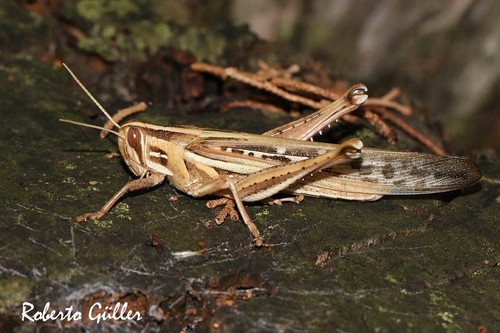
Schistocerca cancellata is a locust species that belongs to the subfamily Cyrtacanthacridinae. It is the primary swarming locust species found in subtropical South America. This species displays the typical phase polymorphism common to locusts. Solitarious nymphs of this species are green, while gregarious nymphs are yellow with a black pattern. Morphological differences also exist between solitarious and gregarious adult individuals of this species. For many years, these two distinct phases were incorrectly thought to be separate species, and the gregarious form was misidentified as Schistocerca paranensis. The solitary phase of Schistocerca cancellata occurs in South America between 18°S and 35°S. Plagues of this locust originate from a permanent desert and semi-desert zone in northwest Argentina, southeast Bolivia, and western Paraguay. Plagues develop when favorable rains allow successful breeding, which is then followed by gregarisation. Swarms of gregarious adult locusts may then migrate into regions used for growing crops.