About Schinia florida Guenée, 1852
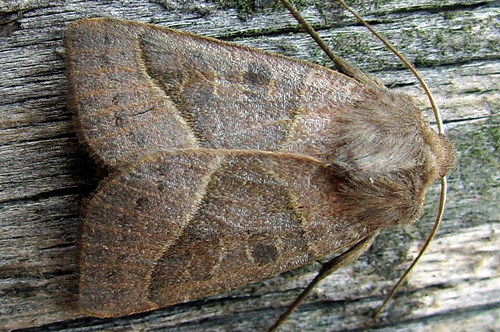
Schinia florida, commonly known as the primrose moth, is a moth species in the family Noctuidae, described by Achille Guenée in 1852. Its geographic range covers most of temperate North America, excluding the west coast. Adult primrose moths have a pink head, and pale yellow to creamy white thorax and abdomen. The forewings are pink with pale yellow markings, while the hindwings are creamy white. The average wingspan of adults is around 30 mm. Females lay their eggs on the flower buds of evening-primroses (Oenothera spp.), which act as host plants for the species' larvae. Eggs hatch between 4 and 5 days after being laid. Larvae develop through five instar stages before burrowing into the ground to pupate and pass the winter. The species produces one generation per year, and the adult flight period is synchronized with the bud development of its larval host plants. Adult primrose moths are active at night, and typically rest inside evening-primrose flowers during the day.