About Scaptotrigona hellwegeri (Friese, 1900)
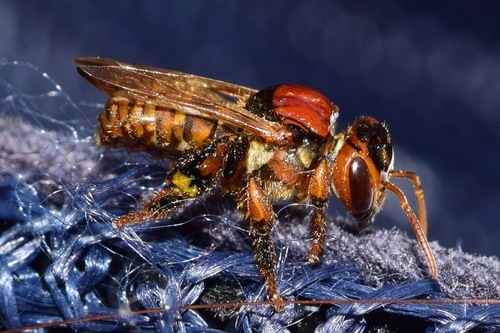
Scaptotrigona hellwegeri (Friese, 1900) is a member of the genus Scaptotrigona. Like other members of this genus, it lacks a stinger. Adult individuals of this species range from 47 to 51 millimeters in length. Its thorax is typically reddish-orange, with a black area on the upper surface and black lines on the underside. The abdomen is usually yellow, brown, or honey-colored, marked with black stripes. Its legs are orange, with additional black and yellow markings. This is a stingless bee that builds its hives inside tree hollows. It shows a preference for pollinating capulincillo, periquillo, cascarillo de montaña, crucecillo, cuaulote, cascalote, palo de corazón bonito, arrayán guayabillo, and caobillas, though researchers have recorded it pollinating more than 160 plant species from over 50 plant families overall. This species is endemic to Mexico, and has been observed in the Mexican states of Durango, Sinaloa, Nayarit, Jalisco, Michoacán, State of Mexico, Federal District, Morelos, Puebla, Guerrero, and Oaxaca. This species is used in meliponiculture, the practice of raising stingless bees to harvest their wax and honey; the honey of this species is commonly attributed with medicinal properties. In the Oaxaca region, it is commonly known locally as "cucu de mamey" (translated as mamey bee). This common name refers both to the orange color of the bee's body, and the fact that its honey has a scent similar to that of mamey zapote. This species pollinates a number of agriculturally important plant species, including achiote, leme, coconut, mango, capulincillo, rambutan, avocado, chayote, and jocote.