About Scadoxus puniceus (L.) Friis & Nordal
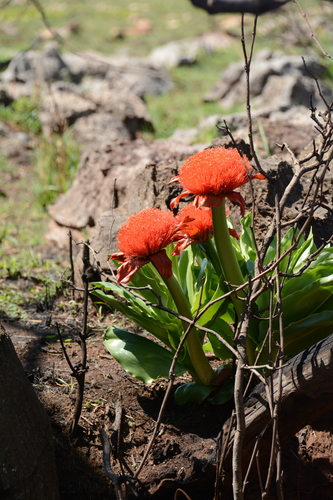
Scadoxus puniceus produces bright red, round fruits around one centimeter wide, with each fruit containing a single opalescent seed. This species is cultivated as an ornamental plant; it had already become popular in the Netherlands by the start of the 18th century. In traditional medicine, the bulb of Scadoxus puniceus is considered poisonous when consumed in large amounts. Despite this, it is traditionally used to treat coughs, gastro-intestinal problems, febrile colds, asthma, leprosy, sprains and bruises, and as an antidote to poisons. It is also used as a diuretic. The plant's leaves are applied externally to sores and ulcers to help healing and act as an antiseptic. The plant is also traditionally consumed during pregnancy as part of an herbal regimen intended to ensure safe labor. Alkaloids found in this plant include haemanthamines, haemanthidine, 6-β-hydroxycrinamine, scapunine, and scadoxucines.